Short Annapurna Base Camp Trek - 6 Days
 in TripAdvisor
Recommended by 99% of travelers
in TripAdvisor
Recommended by 99% of travelers
AI Overview & Key Expedition Facts
Curated by Yeti Hikes Sherpa Intelligence
To legally embark on this adventure, international travelers must possess a valid passport with a minimum validity of six months, a Nepalese tourist visa, and the essential Annapurna Conservation Area Permit along with a registered Trekkers Information Management System card. Preparing for this moderate route requires solid cardiovascular endurance and the ability to comfortably hike for five to seven hours daily over steep stone staircases and uneven terrain. Trekkers should also cultivate mental resilience to adapt to remote mountain conditions and maintain a steady pace to ensure proper altitude acclimatization throughout the ascent.
Overview Of Short Annapurna Base Camp Trek - 6 Days
- Region
- Annapurna Region
- Destination
- Nepal
- Max Altitude
- 4,130 m/13,550 ft
- Activity
- Trekking in Nepal
- Duration
- 6 days
- Group Size
- 1-20+
- Best Season
- March to May /Sept to Nov
- Accommodation
- Tea house/Lodge
- Meals
- Breakfast + Lunch + Dinner
- Transportation
- Private/Shared Vehicle
Highlights Of Short Annapurna Base Camp Trek - 6 Days
A beautiful drive from Pokhara to Jhinu Dhada, the starting point of the trek through lush hills, traditional villages and terraced fields, is the start of the adventure.
Be in a beautiful village of Gurung people with great views of Machapuchare and the Annapurna range, and situated on a ridge with mountains all around.
Enjoy quick changes between subtropical forests and bamboo groves to high altitude alpine landscape and glacial valleys.
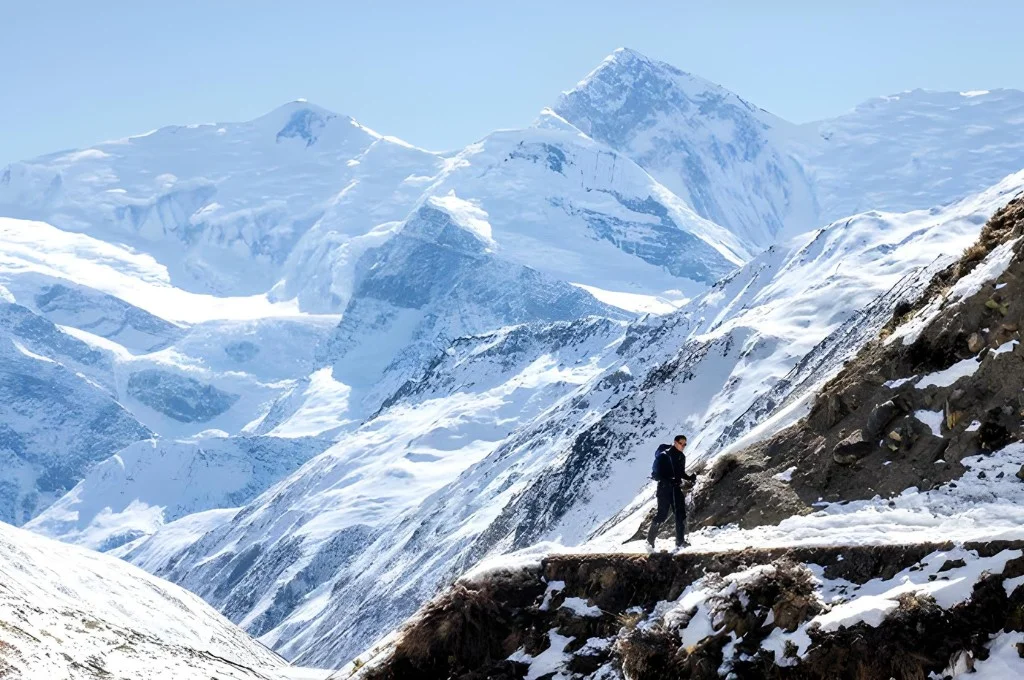
Watch over the two legendary base camps with the skyline dominated by the Annapurna I, Hiunchuli and Machapuchare mountains.
Experience a spectacular sunrise at Annapurna Base Camp when the snow-capped mountains are lit up in gold, it is one of the most magical things in Nepal.
Hot springs are located on the riverbank, and after days of hiking, it is ideal to relax the body and relax the muscles.
Spend nights in old fashioned teahouses, eat Nepali food and interact with locals in villages in the mountains on the way.
Description Of Short Annapurna Base Camp Trek - 6 Days
Short Annapurna Base Camp Trek is a beautiful and time saving trek in the midst of the Annapurna region of Nepal. It is suitable for you if you have limited time and still want to feel the Himalayas closely. This 6-day trek presents impressive scenery of Annapurna I, Machapuchare (Fishtail), and Hiunchuli, as well as the cultural experiences in the traditional Gurung villages such as Chhomrong. Beginning with a road trip to Pokhara to Jhinu Danda, the path goes through bamboo forests, glacial valleys and high alpine land to finally reach the famous Annapurna Base Camp. After the trekking, you may enjoy the beautiful sunrise on the snow-capped peaks and relax in the natural hot springs of Jhinu Danda and then go back through Birethanti. The short Annapurna Base Camp trek is ideal for moderate trekkers and is a combination of mountain views, local culture, and adventure, which makes it one of the best short treks in Nepal.
How hard is the Short ABC Trek?
The Short Annapurna Base Camp (ABC) trek is moderately hard and offers stunning views of the mountains as well as a great trekking experience. The high altitude and some tough climbs still require a lot of mental and physical strength, even though this trek is shorter than the usual ABC trek. If you plan ahead, your trip can be safer and more fun.
What are the challenges of the Short Annapurna Base Camp Trek?
Trekking to 4,130 meters required adequate acclimatization and awareness of altitude sickness symptoms, even though the route is shorter.
Particularly on days with greater elevation gains, certain steep ascents require a high level of physical fitness and endurance.
Careful pacing is crucial because the shortened itinerary provides fewer days to acclimatize to higher altitudes.
Trekking conditions may be impacted by unexpected rain, snowfall, or temperature drops, requiring you to use appropriate equipment and planning.
Be prepared for basic accommodations with little hot water or heating, particularly in the off-season.
To comfortably finish daily hikes and enjoy the experience, physical preparation is crucial, even for short treks.
Is the Short Annapurna Base Camp Trek Worth It?
For those with limited time and still want the excitement of standing at Annapurna Base Camp surrounded by majestic Himalayan peaks, the Short ABC Trek is ideal. It retains the breathtaking scenery and famous sunrise views with a few cultural villages. Although the faster pace makes it more physically difficult, it is completely manageable for fit hikers and provides a satisfying experience in less than a week. It is a quicker, more efficient version of the same remarkable journey as the traditional route.
With limited time in Nepal, enjoy the stunning Short ABC trek can be finished in just 5-7 days.
In addition to providing breathtaking mountain views and a wealth of cultural experiences, the shorter route lessens physical strain.
Compared to traditional Annapurna Base Camp treks, there is a lower chance of altitude sickness, which makes it appropriate for beginners.
Without the lengthy duration, experience the famous views of Annapurna South, Machapuchare (Fishtail), and Himalayan peaks.
Reduce the cost of lodging, meals, and permits by finishing the hike more quickly without sacrificing the experience.
Experience a more tranquil trekking setting than the crowded traditional Annapurna Base Camp trail.
What is the best season for the Short Annapurna Base Camp Trek?
The Short Annapurna Base Camp Trek is a great trek with amazing Himalayan views and cultural diversity throughout the year, but it can be even better by choosing the right season. Every season is going to be different in terms of the landscapes, weather conditions, and trails. Spring and autumn are the most suitable ones, as they are characterized by clear skies, lively nature, and comfortable conditions of trekking. The right season will make it safe and give the best views of the mountains.
Spring (March to May)
Spring is the most beautiful time to trek to Annapurna Base Camp, making it the best time to experience nature. The trails are full of blooming rhododendrons, magnolias and wildflowers particularly around Chhomrong and Bamboo. The temperature during the day is between 15 and 22 degrees Celsius in the lower altitudes and -5 to 5 degrees Celsius at base camp. The skies are mostly clear in the mornings and you can have a great view of Annapurna I, Machapuchare and Hiunchuli.
Autumn (September to November)
Autumn is another best time to trek in the Annapurna region. The monsoon sweeps away the dust, and crisp mountain views, golden terraced fields and clear blue skies are revealed. The daytime temperatures are between 14 and 20 degrees Celsius in the lower areas and 5 to 2 degrees Celsius at the base camp. This is the most reliable season with dry trails and least chances of landslides to have a short and safe trek.
Season | Months | Temperature | Scenery | Why Choose It |
Spring | March to May | 15 to 22°C (lower), -5 to 5°C (ABC) | Blooming flowers, green forests | Great weather, rhododendrons, good visibility |
Autumn | September to November | 14 to 20°C (lower), -5 to 2°C (ABC) | Clear skies, golden fields, sharp views | Best visibility, dry trails, stable conditions |
Monsoon | June to September | 18 to 25°C (humid, wet) | Cloudy, slippery trails, leeches | Not recommended because of rain, poor views, landslides |
Winter | December to February | 5 to 15°C (lower), -10 to -2°C (ABC) | Snow-covered trails, icy peaks | Quiet trails but cold and risky at higher elevations |
Why not the monsoon and winter season?
During monsoon season, there is a lot of rainfall, leeches, muddy and slippery paths, and cloud-covered mountains, which make visibility significantly lower and increase the risk of landslides. Conversely, winter gives clear weather but very low temperatures, snow-covered trails and the possibility of higher teahouses being closed, which makes the trek more difficult and less accessible to most trekkers.
Outline Itinerary of Short Annapurna Base Camp Trek
Day 1: Drive from Pokhara to Jhinu Danda and trek to Chhomrong
Day 2: Trek from Chhomrong to Dovan
Day 3: Trek from Dovan to Annapurna Base Camp via Machapuchare Base Camp
Day 4: Sunrise at Annapurna Base Camp and trek down to Bamboo
Day 5: Trek from Bamboo to Jhinu Danda
Day 6: Trek to Birethanti via Siwai and drive back to Pokhara
Itinerary Of Short Annapurna Base Camp Trek - 6 Days
Your trip starts with a very early morning drive up to the foothills of the Annapurna region, north of Pokhara. The path takes you through beautiful countryside villages, terraced farmlands and meandering rivers to Jhinu Danda, where the trek begins. Once you have a brief tea break and given your gear check, you will cross a long suspension bridge where your trek officially starts.
The trail continues to climb to the top of the hill on stone steps carved into the hill. You will go through small villages of farmers, through forests and ridge and beautiful views of the valleys. The path is lined with flowering rhododendrons in spring and there are prayer flags at regular intervals marking the route ahead.
The destination of the day is Chhomrong, a pretty Gurung village built on a ridge overlooking the Annapurna range and Machapuchare. On the way to Annapurna Base Camp Trek, it is the best camping site for all trekkers. You will find a teahouse and have a good dinner, and be ready to have a longer day tomorrow.
The day begins with a steep walk down stone steps to the Chhomrong Khola, and a suspension bridge crossing. At that point, you will start a gradual uphill walk through dense forests to Sinuwa, and then proceed on a shady trail into more bamboo thickets and jungle areas.
The path is wavy as it goes through valleys and hills, offering a mix of uphill and downhill sections, and sometimes the snowy mountains can be seen through the trees. You will go by Bamboo, a little village, and then on to Dovan, which is hidden away in a quiet, peaceful forest ravine.
Dovan is peaceful and not as busy as other stops, which makes it a good place to rest and recover. The humid, cool air and the roar of the Modi Khola nearby make the overnight stay very peaceful. You will sleep early after a satisfying dinner to prepare for the next day's high-altitude climb.
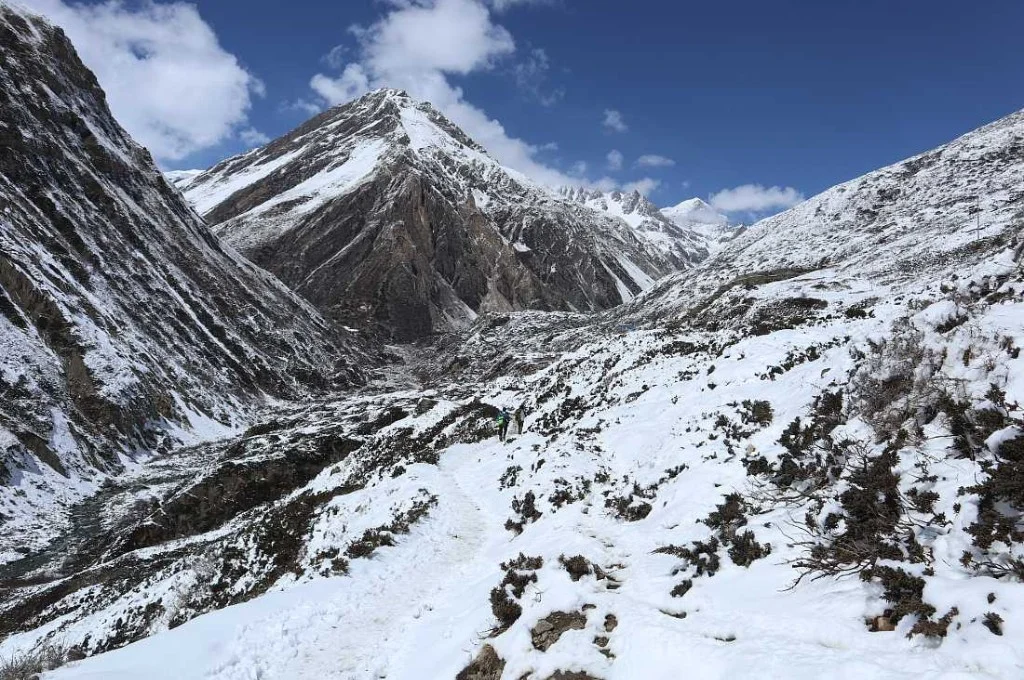
Leaving Dovan, the path ascends gradually through the thick forests and the narrow gorges. The vegetation starts to thin as you climb and the terrain is more open and rugged. It will take you through the village of Deurali, where the landscape suddenly changes to an alpine landscape and glacier rivers.
Upon arrival at Machapuchare Base Camp (MBC), you will have a brief rest with an amazing view of the sacred, fishtail-shaped peak of Machapuchare. The trail leaves MBC and then gradually ascends along a broad glacial basin, with high cliffs and icy streams around. The air is getting thinner at high altitude, and as you walk slowly, you take in the breathtaking views.
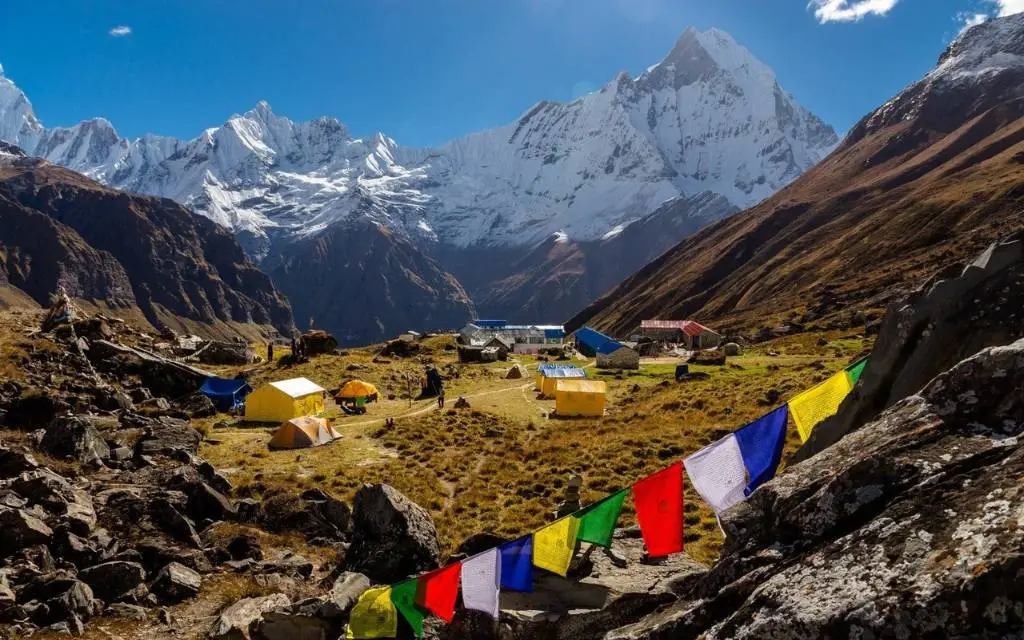
After a long time, you will arrive at Annapurna Base Camp, a natural amphitheatre of some of the highest mountains in the world. The base camp is the highlight of the trek where the snow-capped giants surround you. You will reach there in the afternoon, have a sleep at the teahouse and be ready to see an incredible sunrise in the morning.
Get up early and watch a magical Himalayan sunrise on Annapurna I and other mountains. When the first rays of gold touch the snowy peaks, the whole basin gets illuminated with the most amazing colours, and it becomes one of the most unforgettable moments of the hike. It is a wonderful moment to think, take pictures and enjoy the trip.
You will have breakfast at base camp and then start the long descent. The back track is the reverse of the approach path through the valley, with the Machapuchare Base Camp and Deurali. The descent is less demanding, yet it may be tough on the knees; thus, trekking poles are useful. You will also meet other trekkers on their way up, and this will remind you of the distance you have covered.
At Bamboo, a peaceful and cool forest village, you will stay overnight. It is a quiet place to stretch and rest after a physically strenous day and to listen to the soothing sounds of the woods. A hot dinner and a good night of sleep will restore your strength to the last part of your journey.
The path today is similar to the previous one as you hike back through Sinuwa and up to Chhomrong. The stone staircases challenge your stamina once more and most notably the steep ascent back up into the village. You take a brief rest in Chhomrong and then start descending steeply to Jhinu Danda.
The path goes down through terraced fields, small houses and greenery. The closer you get, the more pleasant the climate and the lower the altitude. When you arrive at Jhinu Danda, you will check into your lodge and then get ready to experience one of the highlights of the trek, the natural hot springs.
The hot springs are located along the riverbank and can be reached by a short 15-minute walk downhill, starting in the village. A bath in the hot mineral water with the roar of the river is a wonderful thing to relax your weary muscles. It is your final night on the trail so make sure you relax and have a nice time in the serene environment.
On the last day of your trek, you will have an easy hike down to Siwai through forest paths and small villages. This section of the trail is not as strenuous, and you can take it leisurely, as you take in your final glimpses of the hills and valleys. You will see several villages, where people live their lives.
The trail then meanders its way to Birethanti, where you will end your trek at Siwai. Birethanti is a lovely village with a riverside location and a serene atmosphere and is also a TIMS/permit checkpoint. It is an excellent place to take a break, have a drink or snack and think about the trip before meeting your car.
Once you have exited the ACAP post, you will then get into a jeep and proceed to the 2-3 hour drive back to Pokhara. When you leave town and go back to the comforts of your hotel, you will have memories of the mountains, culture and adventure that make the Annapurna Base Camp so memorable.
What's Included In Short Annapurna Base Camp Trek - 6 Days
Included
Private vehicle transfer from Pokhara to Jhinu Danda
Private vehicle transfer from Siwai/Birethanti to Pokhara
Teahouse/lodge accommodation during the trek (twin-sharing basis)
Three meals a day during the trek (breakfast, lunch, and dinner)
Tea or coffee with breakfast
Annapurna Conservation Area Permit (ACAP)
Trekkers’ Information Management System (TIMS) card
Licensed, English-speaking trekking guide
Porter service (1 porter for every 2 trekkers) with equipment and insurance
First aid kit carried by the guide
Sleeping bag and down jacket (to be returned after trek)
Hot springs entrance fee at Jhinu Danda
Government taxes and service charges
Excluded
Meals and accommodation in Pokhara before/after the trek
Snacks, drinks (soft drinks, alcohol, bottled water), and extra food items
Wi-Fi, battery charging, and hot showers at teahouses (extra cost)
International and domestic airfare
Nepal entry visa fee
Travel insurance (must cover high-altitude trekking & helicopter evacuation)
Tips for guide, porter, and drivers
Additional transportation in case of early return or itinerary change
Personal trekking gear and clothing
Personal medication and first aid supplies beyond the group kit
Additional Information Of Short Annapurna Base Camp Trek - 6 Days
Accommodations on the Short Annapurna Base Camp Trek
The Short Annapurna Base Camp Trek accommodation is in local teahouses, a simple and functional place that offers accommodation to trekkers. The local families operate these teahouses and provide a comfortable atmosphere, although the comfort is relative to the altitude. The rooms are simple, and usually consist of two single beds, blankets, and a small table or shelf. At lower altitudes, there are options of having a private room although at higher altitudes this becomes rare, and one can only have a shared room or a dormitory type of arrangement.
Lower Elevations (Chhomrong, Bamboo, Jhinu Danda, Dovan)
The teahouses are more developed at lower altitudes. The rooms are mainly twin-sharing with foam mattresses, pillows and thick blankets. The walls can be as thin as plywood. The bathrooms with hot showers heated by the solar are possible at an extra cost of NPR 200 to 500. Some rooms or the dining area may have charging outlets, usually at a cost of NPR 100 to 300 per device. Blankets are provided, but it is very much recommended to bring a sleeping bag to keep you warm and hygienic.
Higher Elevations (Deurali, MBC, ABC)
The further you go beyond Deurali to Machapuchare Base Camp (MBC) and Annapurna Base Camp (ABC), the more basic the teahouses are as the place becomes more remote. The rooms are usually shared, unheated, and constructed functionally, rather than for comfort. In extreme weather, there might not be any running water at all, and there might not be any extra blankets. You may require payment to use toilet paper, charging, or even heating the room.
Accommodation Tips on the Short ABC Trek
Further up, you should expect shared rooms or dormitory sleeping accommodation.
Blankets are provided and a sleeping bag would be advisable on cool evenings.
Bathrooms are also common and are not in the rooms.
Some of the stops have hot showers, which are typically at an additional cost.
Toilet paper, Wi-Fi, and charging devices can be an additional fee.
Bring your personal toiletries, towel and a pair of flip-flops to use in the bathroom.
It is advisable to make a booking in advance, particularly during high seasons (spring and autumn).
Food and Beverage Options on the Short Annapurna Base Camp Trek
During the Short Annapurna Base Camp Trek, food and beverages are available in the teahouses along the trail. The foods are basic, but good, and designed to suit the trekkers. Most of the meals are carbohydrate-rich and vegetarian, which will provide you with the energy necessary to make long hikes. The higher up you go, the less variety there is and the higher the prices because all has to be brought up by mules or porters. Nevertheless, you will still have common and comfort food that will help you recover after a day of hiking.
Breakfast Options:
Typical foodstuff is porridge, pancakes, chapati, Tibetan bread, toast with jam and boiled or scrambled eggs.
Muesli, cornflakes with hot milk, and hash browns are also available in some of the teahouses.
Tea or coffee is often included in breakfast combos.
Lunch Options:
Lunch is normally taken at a mid-trail teahouse, and it often is comprised of fried rice, fried noodles, chowmein or soup.
The most common and most refilled meal is called Dal Bhat (rice, lentil soup, vegetables and pickles).
Some places serve simple pasta and spring rolls.
Dinner Options:
The common dinner option is Dal Bhat where the portion is very large, and you can usually get refills as much as you want.
The other options are warm soup of garlic and spaghetti or thukpa.
Hot Beverages:
Ginger tea, masala tea, lemon honey tea, milk tea and instant coffee are also very common.
Hot chocolate and black tea are also common, especially in cool regions.
Cold Beverages:
Bottled water, soda (Coke, Fanta, Sprite), and canned fruit juices can be found but they are expensive as you go up.
Most villages have local soft drinks and flavored drinks (such as mango juice).
You may find alcohol (such as beer or raksi) but it is best to avoid it during trekking at altitude.
Food Safety:
Choose hot and freshly cooked foods to reduce the risks of food-borne infections.
Avoid meat dishes above Chhomrong as it is not stored hygienically at higher elevations.
Raw salads, uncooked vegetables, and milk products should be avoided unless you are certain they are fresh.
Eat only at good teahouses with clean kitchens and good sanitary habits.
Water Safety:
Do not drink tap water at all during the trek.
Treat the available local water by using water purification tablets, SteriPENs, or portable filters.
Boiled water can be found at teahouses, usually at a small charge-bring an insulated bottle to carry it.
Avoid ice in drinks and clean your water bottles using purified water.
Toilet and Bathroom facilities on the Short Annapurna Base Camp Trek
The toilet and bathroom facilities on the Short Annapurna Base Camp trek depend on altitude and the infrastructure of the villages. The higher the trekkers go, particularly beyond Chhomrong and into the alpine zone, the more basic the amenities are.
Toilet Facilities
The toilets on the Short ABC trek are fairly standard and functional. Most teahouses in lower villages such as Ghandruk and Jhinu Danda have Western-style toilets or squat toilets, usually with a flush or water bucket. The higher you go, particularly beyond the Himalaya and to ABC, the more basic the toilets are, typically squat toilets shared by all the guests, and little cleaning is done.
Bathroom Facilities
The Short ABC trek has basic and very limited bathroom or shower facilities, depending on altitude. Hot showers (using gas or solar heaters) are available in some teahouses in lower areas at an additional fee (typically NPR 300 to 500 or). But at higher altitude such as Deurali or Annapurna Base Camp, there might not be any shower, or it might be a cold-water bucket wash.
Personal Hygiene Tips
Hygiene on the trail is very important in avoiding illnesses, particularly in the case of shared toilets and limited water.
Bring necessities such as biodegradable soap, fast-drying towels, hand sanitizer, and no-rinse cleansing wipes.
Brush your teeth using purified or boiled water and do not use untreated tap water.
Wear fresh base layers and socks every day or every other day to avoid the accumulation of bacteria and remain comfortable in different weather conditions.
Safety Measures and Security Tips during the Short Annapurna Base Camp Trek
The Short Annapurna Base Camp Trek is an incredible adventure that takes you through the Himalayan scenery of Nepal, yet it is an adventure that has its own challenges that require attention to safety. To have a successful trek, it is necessary to plan, physically condition, and understand the risks of altitude. When you have the proper safety precautions, you will be able to have this classic adventure with ease and security.
Safety Measures
The hike is not long, but the altitude changes are rapid, so drink plenty of water and do not hurry.
Begin early in the morning to avoid afternoon weather changes
The trekking poles will prevent falls on the rocky or icy terrain, especially downhill.
Dress in layers and carry rain gear even on clear days since mountain weather is unpredictable.
Be aware of the symptoms of altitude sickness (headache, nausea, dizziness) and descend in case they get worse.
Use marked trails, do not go off the trail, even to shortcuts, because the terrain may be unstable.
Security Tips
Do not leave your stuff unattended in the communal spaces of the teahouses; lock your backpack where you can.
Enroll your participation in every TIMS and ACAP checkpoint to be tracked and assisted in case of an emergency.
Hiking alone in the remote areas is not recommended; it is better to have a guide or a fellow hiker.
Take a local SIM card or satellite device as a backup as there is network in most places up to Chhomrong and MBC.
Be sensitive to local culture and property and have good relationship with the locals to have an added security and support.
How to handle the emergency situations during the short ABC Trek?
Even the shorter trek to Annapurna Base Camp requires negotiating isolated trails, shifting elevations, and erratic weather. Even though the trail is well-maintained and generally safe, unforeseen problems like landslides, sprains, altitude sickness, or bad weather can happen. A safer and more assured trekking experience is guaranteed when one is both physically and psychologically ready for such circumstances. Having the appropriate equipment and knowing what to do in an emergency can mean the difference between a manageable delay and a major risk.
Essential Emergency Tips during the ABC Trek
A basic first aid kit that includes blister care, painkillers, and altitude medication should always be carried.
Go with a certified guide or porter who has received training in local rescue techniques and mountain first aid.
Purchase travel insurance that covers evacuation by high-altitude helicopter.
Recognise the early symptoms of acute mountain sickness, such as headache, nausea, and dizziness, and descend right away if they get worse.
Avoid trekking during storms, especially in areas that are prone to avalanches, and keep an eye on the daily weather forecast.
Keep track of local emergency numbers, such as the hospital hotlines in Kathmandu and Pokhara, the police hotlines, and the TAAN rescue.
In case of delays or nightfall, carry an extra headlamp, whistle, and power bank.
In the event that a mobile signal is not available, keep a physical map and/or GPS device with you.
Do not trek alone in the isolated sections and always follow the marked trails.
Training Plan for the Short Annapurna Base Camp Trek
The moderate trek is challenging on your body and mind because it has steep trails and is at a high altitude. A well-planned training program can help you gain the strength and confidence you need to finish the trek without any problems. Here is a simple 6 week training plan for the Short Annapurna Base Camp Trek:
| Physical Training | Mental Preparation | Notes |
Week 1 | 3 days: 30 min brisk walking or jogging 1 day: Light strength training (legs & core) | Get to know the symptoms of altitude sickness and trek details. | Start slow, focus on consistency. |
Week 2 | 3 days: 40 min brisk walking/jogging 1 day: Stair climbing or hill walking (20 min) | Practice mindfulness or breathing exercises. | Begin uphill practice. |
Week 3 | 3 days: 45 min aerobic exercise 2 days: Strength training focusing on legs & core | Visualize trek success and challenges. | Add backpack with light weight (3-5 kg) for walks. |
Week 4 | 4 days: 1 hour hikes on uneven terrain or trails 1 day: Stair/hill climbing (30 min) | Develop positive self talk and coping strategies. | Increase backpack weight gradually. |
Week 5 | 3 days: 1-2 hour hikes with loaded backpack (5-8 kg) 1 day: Strength training | Practice patience and adaptability techniques. | Simulate long trek days. |
Week 6 | 3 days: 2-3 hour hikes with full backpack (8-10 kg) 1 day: Light aerobic recovery | Prepare mentally for altitude and weather changes. | Rest well before trek. |
Travel Insurance for the Short Annapurna Base Camp Trek
In case of planning the Short Annapurna Base Camp (ABC) trek, it is highly recommended to have comprehensive travel insurance to have a safe and carefree trek. The dangers of trekking in high-altitude remote locations include altitude sickness, medical emergencies, unstable weather, and possible trip interruptions. Proper insurance cover will save you the money and guarantee you the medical care and evacuation services in case of an emergency.
It covers the unexpected situations like medical emergencies, cancellation of trips, lost bags and emergency evacuation during the trek.
It includes emergency medical treatment, mountain sickness, and helicopter rescue in high mountains.
The insurance covers prepaid expenses in the event that you need to cancel or cut your trek short due to illness, injury or other unforeseen events.
It replaces the necessary equipment in case your luggage is lost or delayed on the way to or back to Nepal.
Travel insurance is also advised to be purchased as soon as you book your trek to cover any cancellation or emergency before the trek.
What are the recommended providers for travel insurance?
World Nomads
Allianz Travel Insurance
IMG Global
Important Insurance Tips:
It is important to buy your travel insurance as soon as you book your trek to insure against cancellation or other emergencies prior to your departure.
You need to make sure that you have a policy that covers high altitude hiking (above 4,000 meters).
Make sure that medical evacuation and helicopter rescue is covered as the trek is remote.
Always carry a digital and hard copy of your insurance policy and emergency contact numbers with you when trekking.
You need to ensure that the insurance covers medical care or trip cancellations.
What are the required documents and permits for the Short Annapurna Base Camp Trek?
To make the Short Annapurna Base Camp (ABC) trek, you must have all the documents and permits in place to make the process as smooth as possible. Trekking in the Annapurna region also requires special permits that help control tourism and conserve the environment, and valid documents such as passports and visas are required to enter Nepal.
Required Documents
Valid Passport: All foreign nationals are required to have a valid passport; it must have at least six months validity as at the date of entry into Nepal.
Nepal Visa: Foreign visitors require a Nepal Visa, which can be obtained upon arrival at Tribhuvan International Airport or can be applied online.
Travel Insurance: It is strongly advised to have an insurance that covers trekking and emergency evacuation.
Emergency Contact Information: You should keep a copy of the printed contact details and insurance policy numbers.
Required Permits and it's Cost
Permit | Where to Obtain | Nepali Citizens | SAARC Citizens | Foreign Citizens |
Annapurna Conservation Area Permit (ACAP) | ACAP office in Kathmandu or Pokhara | NPR 300 / USD 2.50 | NPR 1,000 / USD 8.50 | NPR 3,000 / USD 25 |
Trekkers’ Information Management System (TIMS) Card | Nepal Tourism Board offices or authorized agents | NPR 200 / USD 1.70 | NPR 1,000 / USD 8.50 | NPR 2,000 / USD 17 |
Where will permits be checked at the Short ABC Trek?
At the gate to the Annapurna Conservation Area: Your ACAP and TIMS Card will be checked as you enter the conservation area at places like Nayapul or Bhulbhule.
Tea houses and lodges: There are lodges and tea houses that want to see your permits before they can give you a room to stay, as part of the local rules.
Police or security checkpoints: Sometimes, police or park officials will randomly check permits to ensure that they are being adhered to.
Prior to helicopter evacuations: There may be a need to prove valid permits in case of an emergency evacuation in the area.
Comparison between the 6 days Annapurna Base Camp Trek and 14 days Annapurna Base Camp Trek
The Annapurna Base Camp Trek is available in different durations, where the 6-day trek is the shortest trek that can be completed by trekkers with limited time, and the classic 14-day trek is a more comprehensive trek that provides a complete Himalayan experience. Both trails end at the famous Annapurna Base Camp at 4,130 meters, but vary in speed, acclimatization, trail coverage, and cultural exposure.
Key Difference | 6-Day Short ABC Trek | 14-Day Classic ABC Trek |
Duration and Pace | It is fast paced and is completed in just 6 days | It has slower pace with rest and acclimatization days over 14 days |
Acclimatization | It has minimal acclimatization and quicker altitude gain | It has gradual ascent that allows safer adjustment to altitude. |
Route and Scenery | The trek follows the direct route, fewer side trails or scenic viewpoints. | The trek covers Poon Hill, Ghorepani, and more diverse landscapes. |
Cultural Experience | Limited interaction with local villages due to fast pace. | Rich exposure to Gurung, Magar villages and cultural traditions. |
Cost and Trekking Style | The trek is budget-friendly, but more physically demanding per day. | The trek has higher cost, but relaxed pace suitable for beginners or leisure trekkers. |
Gear List Of Short Annapurna Base Camp Trek - 6 Days
Clothing
Base Layers
Thermal tops and bottoms (for warmth at night).
Moisture-wicking t-shirts (2-3, quick-dry fabric).
Lightweight trekking pants (convertible into shorts if possible).
Insulating Layers
Fleece jacket or sweater.
Insulated down jacket (for colder nights and higher altitudes).
Outer Layers
Waterproof and windproof jacket.
Waterproof pants.
Hiking Socks
Wool or synthetic socks (3-4 pairs).
Liner socks (optional, to prevent blisters).
Accessories
Hat (for sun protection).
Beanie or warm hat (for higher altitudes).
Buff or scarf (to protect against wind and dust).
Gloves (both lightweight and insulated if possible).
Footwear
Hiking Boots
Sturdy, waterproof trekking boots (well-broken-in).
Camp Shoes
Lightweight sandals or camp shoes for resting in the evenings.
Backpacks
Daypack (20-30L)
For essentials like snacks, water, and rain gear.
Duffel Bag (if using porters)
You may need a duffel for the bulk of your gear if you’re hiring porters.
Trekking Gear
Trekking Poles
Helpful for balance and reducing stress on knees.
Sleeping Bag
Rated for temperatures below freezing (around -10°C/14°F).
Water Bottles
Reusable bottles or a hydration bladder (2-3 liters capacity).
Water Purification
Tablets, drops, or a portable filter to avoid purchasing bottled water.
Headlamp
With extra batteries (essential for early starts or evening walks).
Sunglasses
UV protection to safeguard against strong sunlight at altitude.
Trekking Map and Compass
Optional, but can help you follow along with the route.
Toiletries
Sunscreen (SPF 50+)
Lip Balm (with SPF)
Toilet Paper
Wet Wipes
Hand Sanitizer
Biodegradable Soap/Shampoo
Toothbrush and Toothpaste
First Aid & Medication
Personal Medication
Bring a sufficient supply of any prescribed medications.
Basic First Aid Kit
Painkillers, blister care (like moleskin), band-aids, and antiseptic cream.
Altitude Sickness Medication
Such as acetazolamide (consult your doctor before taking).
Snacks and Energy Foods
High-Energy Snacks
Protein bars, nuts, dried fruit, chocolate, or energy gels for extra fuel on the trail.
Electronics
Camera/Phone
For capturing memories.
Portable Charger/Power Bank
Charging points may be scarce and expensive.
Spare Batteries
Cold weather can drain batteries quickly.
Miscellaneous
Money
Carry enough cash for food, charging, and tips in remote areas.
Trekking Permits and Passport Copies
Ensure you have copies of your TIMS and ACAP permits, as well as your passport.
Small Locks
For your bags.