Jiri to Everest Base Camp trek- 21 Days
 in TripAdvisor
Recommended by 99% of travelers
in TripAdvisor
Recommended by 99% of travelers
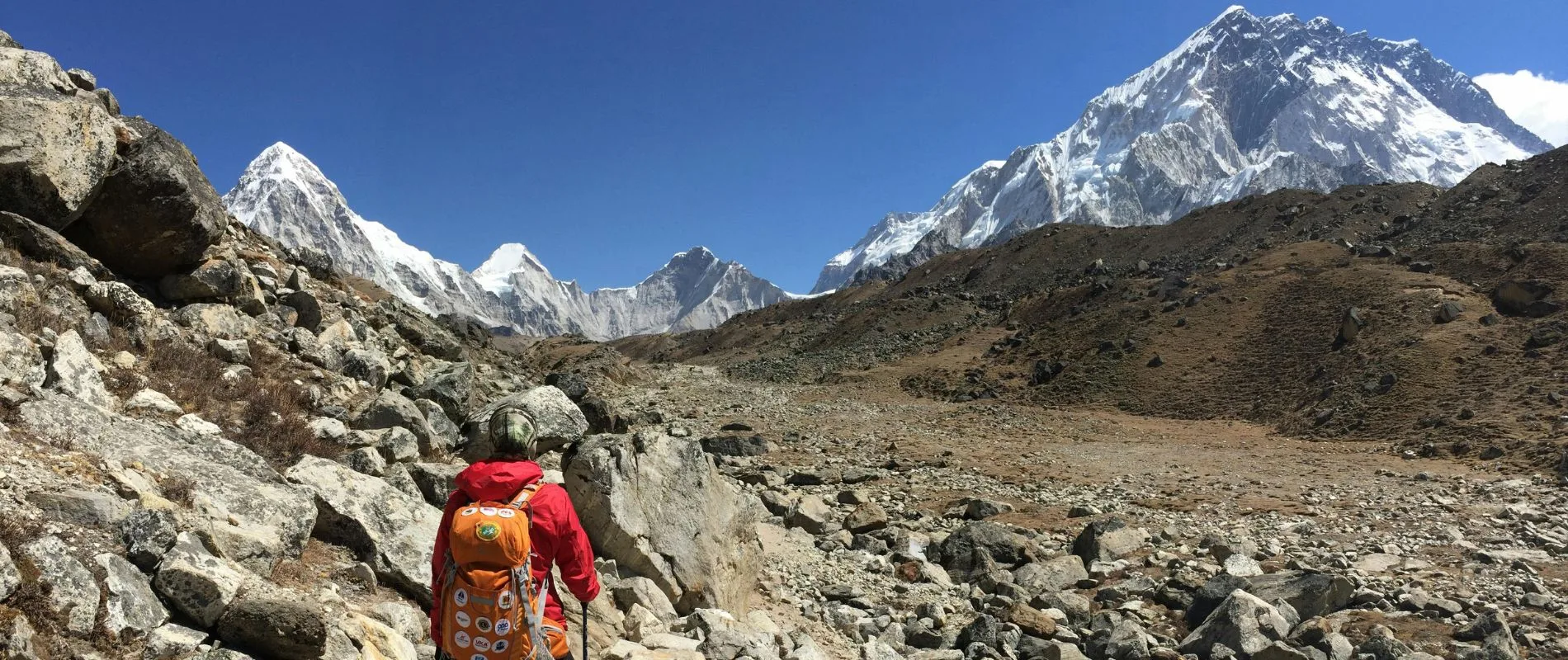
Overview Of Jiri to Everest Base Camp trek- 21 Days
- Region
- N/A
- Destination
- Tibet
- Max Altitude
- N/A
- Activity
- Trekking in Nepal
- Duration
- 21 days
- Group Size
- 1-20+
- Best Season
- March to May /Sept to Nov
- Accommodation
- N/A
- Meals
- N/A
- Transportation
- N/A
Highlights Of Jiri to Everest Base Camp trek- 21 Days
Start the trek with an overland drive from Kathmandu to Bhandar through green hills, rivers, and traditional hill villages, providing a slow induction to mountain life.
Follow the historic route of the original Everest mountaineers, and immerse fully into the Sherpa heartland and touristic village of lower Solukhumbu.
Explore isolated villages such as Junbesi, Nunthala and Bupsa where life is still based on centuries-old traditions and Buddhist ways.
Hike along the subtropical forest, rhododendron forest, pine forest and high alpine land, each with its own flora, fauna and microclimate.
You are accompanied by beautiful sights of Everest, Lhotse, Ama Dablam, Thamserku, and Kusum Kanguru at various points during the trek.
Explore the spiritual life at Tengboche Monastery, Khumjung Monastery (where the Yeti scalp is housed), and other ancient religious sites along the trail.
Stroll on the Khumbu Glacier and reach the legendary Everest Base Camp, a dream destination for trekkers from all over the world.
Take the highest vantage point of the trek and have a jaw-dropping, close-up sunrise view of Everest, Nuptse, and Pumori.
The strategic rest days in Namche Bazaar and Dingboche will help your body adapt to the altitude and minimise the chances of AMS (Acute Mountain Sickness).
There is a chance of seeing Himalayan tahr, musk deer, langurs and eagles particularly in the lower valleys and forested parts of the trail.
Visit the bustling market town, featuring cafes, gear shops, bakeries, and a Sherpa Culture Museum, a meeting place for trekkers and locals.
Conclude the adventure with a thrilling flight over the mountains, a picturesque and heart-pumping end of your trip to the Himalayas.
Description Of Jiri to Everest Base Camp trek- 21 Days
The Jiri to Everest Base Camp Trek by Road is a 21-day classic trek in the Himalayas that begins with a scenic drive to Bhandar. Rather than flying to Lukla, the trek takes you through a more gradual route following the picturesque villages such as Sete, Junbesi, and Nunthala. You will get the best experience of authentic Sherpa and Rai culture, lush forests, ancient monasteries, and serene trails that are generally uncrowded, making it an excellent choice for those who want to experience both nature and culture. The 21-day itinerary offers excellent altitude acclimatisation opportunities, making it safer and more comfortable to climb.
The further you go into the Khumbu region and get on the main Everest trail, the more dramatic the scenery gets with each step. You will be treated to panoramic scenes of Mount Everest, Lhotse, Ama Dablam and Thamserku as you travel through Namche Bazaar, Tengboche Monastery and Dingboche. The last highlight is the visit to the Everest Base Camp (5,364m) and the sunrise viewpoints of Kala Patthar (5,545m), one of the most favourable viewpoints in Nepal. The Jiri to Everest Base Camp trek is ideal for anyone who desires a longer and more comprehensive trekking experience of Everest Base Camp, combining nature, culture, and the excitement of following in the footsteps of great mountaineers.
Best Season for Jiri to Everest Base Camp Trek
You need to choose the idle season for the trek as the weather conditions can greatly impact your trekking experience in Nepal. The best season for Jiri to Everest Base Camp trek is during the autumn and spring season. These months offer a pleasant temperature and unobstructed mountain views.
Season | Months | Temperature Range | Weather Condition |
Autumn | Late Sept to Nov | Day: 10°C to 20°C Night: -5°C to 5°C | Clear skies, dry trails, stable weather, best visibility |
Spring | March to May | Day: 10°C to 18°C Night: 0°C to 8°C | Warm days, blooming rhododendrons, occasional clouds |
Summer | June to August | Day: 15°C to 25°C Night: 5°C to 15°C | Monsoon season, heavy rain, slippery trails, landslides risk |
Winter | Dec to February | Day: -5°C to 10°C Night: -15°C to -5°C | Cold, snow possible at higher altitudes, dry but harsh weather |
Spring (March-May)
The spring trek features the enchanting beauty of rhododendrons and other alpine flowers in full bloom along the trail, making the landscape vibrant and colourful. The weather is usually mild throughout the day, making trekking comfortable without extreme cold. Spring is less crowded than autumn, therefore you can enjoy a peaceful and quiet walk through the traditional villages and forests. But on some days mountain visibility can be low due to occasional clouds or light rain in the afternoon. Additionally, it is possible that early spring will still have some snow on the higher elevations, and the warmer weather in the lower parts can bring more insects, which can be a slight inconvenience.
Autumn(Late September to November)
The autumn season is the best due to the clear and crisp skies and stable, dry weather conditions that make the Himalayan peaks visible in their full glory. It is warm during the day and cool at night, a factor that makes trekking a pleasant experience. However, autumn is also the peak season of trekking, and the trails and teahouses can be quite busy. The high altitude may also lead to very low temperatures at night, and therefore, you must be adequately equipped with cold-weather gear.
Note: It is recommended to avoid the winter and monsoon seasons because the weather is freezing, and there is a lot of snow, which makes the trails slippery and risky. Additionally, most teahouses might not be open. During the monsoon, it rains heavily, the paths are slick, and there is a high probability of landslides, which makes trekking unsafe and uncomfortable. Both seasons lower visibility and restrict the beautiful mountain views.
Accommodations on the Jiri to EBC Trek
The accommodation on the Jiri to Everest Base Camp Trek ranges from lower hills to traditional lodge settlements and rugged teahouse settlements in the high Himalayas. You will be staying in locally run teahouses as you walk through the rich forests and terraced farms of Bhandar and Junbesi, en route to the alpine heights of Lobuche and Gorak Shep. Here, simple but hospitable accommodation will be offered. Though facilities in most wilderness areas are minimal they provide what is needed: a hot meal, a bed you can sleep in and a place to rest,both physically and mentally.
Lower Elevation Section (Bhandar to Phakding)
The initial section of the trek between Bhandar to Phakding takes you through the green mid hills of eastern Nepal, where forests, flowing rivers and terrace farms have taken over the land. Sete, Junbesi and Nunthala are villages offering pure insights into Sherpa, Rai, and Tamang culture; miles away from the more tourist trekking routes. You can expect tranquil tracks, authentic teahouses and welcoming people as you slowly develop the stamina to reach the mountain. The temperature is constant, the air is oxygen-enriched and the biodiversity is remarkable.
High Elevation Section (Namche Bazaar to Everest Base Camp)
The trek ascends as a steep climb into high-altitude setting after meeting with the main route of Everest trail at Phakding. Once leaving Namche Bazaar the landscape changes to more dramatic Himalayan views with Ama Dablam, Lhotse, Nuptse, and of course Everest. The higher you climb, the more you require good acclimatization; that is, you should have rest days in Namche and Dingboche. Teahouses are simpler as you ascend and trekkers have to take their pace in consideration in order not to suffer altitude sickness.
Accommodation Tips
It is recommended for you to bring your own sleeping bag. Although the blankets are supplied, it is still cold at higher elevations so the sleeping bag will keep you warm and it is hygienically sanitary as well.
Wifi and charging sockets are very rare and may be available at an additional cost, so it is recommended to carry your own power bank.
You will find hot showers at an extra cost so carry small amounts of Nepali rupees and wet wipes to keep you clean as well.
The bottled water can be expensive so you can fill your bottles from the lodge tap and use purification tablets or a filter.
Food and Beverage options on Jiri to Everest Base Camp Trek by Road
The available food and beverage options on Jiri to Everest Base Camp Trek by road are limited but diverse considering the remote locations. The teahouses along the trail offer warm, satisfying meals with the consistent dish like dal bhat, noodles, soups, and tea to keep you hydrated and nourished. The food is warm and simple served with genuine hospitality.
The popular dishes on Jiri to EBC Trek are:
Food / Beverage | Description |
|---|---|
Dal Bhat | Combination of rice, lentil soup, and veggies. Ultimate trekking fuel with unlimited refills. |
Sherpa Stew (Shyakpa) & Noodles | Thick soup of vegetables and sometimes meat with homemade noodles. |
Tibetan Bread / Chapati | Served with jam, honey, or eggs for breakfast. |
Porridge, Pancakes, Omelets | Common breakfast items during the trek. |
Potatoes | Boiled, fried, or mashed — filling food at high altitude. |
Milk Tea | Popular warm drink option. |
Black Tea | Simple and refreshing beverage. |
Ginger Tea | Soothing, helps with digestion. |
Lemon Tea | Light, refreshing drink. |
Honey Lemon Tea | Good for sore throat and energy boost. |
Masala Tea | Spiced tea with rich flavor. |
Coffee / Instant Nescafe | Common hot beverage option. |
Garlic Soup / Ginger Soup | Believed to help with altitude and warm the body. |
Food Tips during the Trek
It is recommended for you to avoid meat above Namche Bazaar as there is no refrigeration and all the meat are carried up by porters from lower elevations.
You need to avoid alcohol and smoking as well because it may cause dehydration.
If you are using tap water, you need to use purification tablets or filters.
Bring your own snacks like nuts, chocolate or protein bars.
You need to drink plenty of warm fluids because it will help with acclimatization and digestion.
Toilet and Bathroom Facilities on the Jiri to EBC by road
While the accommodations are available on the Jiri to EBC by road, the toilet and bathroom facilities greatly depend on the elevation and the location. In lower elevations., the lodges are very simple and relatively clean amenities and the higher altitude has primitive toilets.
Toilet Facilities:
Basic but generally clean squat or Western-style toilets are typically provided by teahouses in the lower areas, such as Jiri and Junbesi.
Instead of a proper plumbing setup, these toilets frequently use a manual or bucket-flush system.
The restrooms become less sanitary as you ascend higher (from Nunthala to Gorakshep), frequently reducing to communal squat toilets.
Bathroom Facilities:
Some lodges in the villages at lower elevations offer simple private or attached bathrooms, occasionally with solar-powered or gas-heated hot showers.
For an additional charge, hot showers are typically offered for NPR 300 to NPR 500 (roughly USD 2-4).
The bathroom on the mid to higher sections of the trail are shared and frequently only provide cold water or very little hot water.
There are typically no shower facilities at high elevations like Lobuche and Gorakshep because of the freezing temperatures and scarce water supply.
Personal Hygiene Tips:
Trekkers are advised to carry a fast-drying towel, biodegradable soap and enough hand sanitizer.
Wet wipes and no-rinse body wipes are also a must when you cannot take a bath.
Brush your teeth and wash your face using purified, boiled and treated water to prevent water borne diseases.
Wear clean undergarments and socks every day or every other day to keep things comfortable and minimize the chances of infections or chafing.
A small personal hygiene kit with items like lip balm, moisturizer, sunscreen, and nail clippers to cover general hygiene and comfort.
Is Jiri to Everest Base Camp Trek Worth It?
✓ What Makes It Worthwhile
The trek is a very real experience as it will take you through the isolated villages that are visited by a much lesser number of tourists as compared to the famous Lukla route.
The trek is longer, which means that your body has time to acclimatize to high altitude, which reduces the chances of altitude sickness greatly.
When you travel along the route, you get to experience the rich culture of the Sherpa people by visiting traditional villages and ancient monasteries.
The trail offers stunning panoramic sceneries of Everest and other Himalayan mountains, particularly at the famous locations such as Kala Patthar.
The accomplishment of this physically demanding journey is a big achievement and a close connection with the Himalayan environment.
✗ Challenges to Consider
The trek takes approximately 20 days and this may not be possible to travelers with limited vacation time or tight schedules.
The trek is long and rough and requires a decent level of physical fitness and stamina to cope with the daily walking distances and elevation gain.
Facilities and accommodations are less modern, particularly in the initial phases, which may not be comfortable to people who are used to modern amenities.
The weather and the availability of the treks are not predictable and can delay the trek and make some parts of the trek more difficult.
The journey by road to Jiri can be arduous and is quite a long distance, which can be tiring even before the trekking has started.
How hard is Jiri to Everest Base Camp Trek by Road?
Jiri to Everest Base Camp trek is a traditional and fulfilling trail that provides a more extended and traditional way to the Everest region. It is physically demanding and requires good fitness, mental fortitude, and acclimatization despite the beautiful scenery and cultural experiences. Knowing the challenges of the trek will make you prepare in advance and enjoy the journey without any mishap.
The Jiri to Everest Base Camp trek is physically moderate to highly challenging because it is a long trek (approximately 20 days) and involves a lot of altitude gain up to 5,300 meters at Kala Patthar. Trekkers require good cardiovascular fitness, stamina and endurance to cope with long daily walking hours on uneven and occasionally steep trails.
The trek is also mentally challenging; it requires a lot of resilience and determination. The remote trail is less comfortable and more isolated, which may be psychologically stressful, especially on bad weather days or slower days of acclimatization. Staying positive and being patient are the keys to overcome fatigue and adverse conditions.
The altitude acclimatization is an important factor in the difficulty of the trek. The slow pace of ascent through Jiri gives more time to acclimatize than the Lukla track, although altitude sickness can still pose a problem to those who do not allow their bodies to adjust or who ignore the signs.
Although it can be done by beginner trekkers who are physically fit, previous trekking experience and preparation make it safer and more enjoyable.
The most important thing that can make the trek easier and more enjoyable is preparation, both physical and mental.
How to physically and mentally prepare for the Jiri to EBC by Road?
The Jiri to Everest Base Camp trek is a strenuous trek that needs physical strength and mental strength. The trek is quite long, has a high altitude gain, and is in a very rugged terrain, so planning well ahead is a great way to have a better experience. You can meet the challenges of this classic Himalayan adventure with confidence and safety by combining physical training in cardiovascular fitness, strength and endurance with mental strategies to cope with stress and fatigue.
Week | Physical Training | Mental Preparation |
Week 1 to 2 | Start with brisk walking or light jogging for 30 minutes. | Practice mindfulness or meditation for 5 to 10 minutes daily. |
Week 3 to 4 | Increase to 45 mins cardio sessions and add stair climbing or hiking with a weighted backpack once a week. | Visualize trekking challenges and successful completion. |
Week 5 to 6 | Add strength training focusing on legs, core, and back. | Learn breathing techniques to manage altitude stress. |
Week 7 to 8 | Hike on uneven terrain and increase cardio intensity. | Practice positive self talk and stress coping methods. |
Week 9 to 10 | Include long hikes (4+ hours) with full gear on weekends. | Plan for rest days and mental breaks during the trek. |
Week 11 to 12 | Maintain fitness with mixed cardio, strength, and hiking. | Review emergency plans and stay mentally flexible. |
Outline Itinerary of Jiri to Everest Base Camp Trekking
Day 1: Arrive in Kathmandu and transfer to hotel
Day 2: Full day sightseeing in Kathmandu
Day 3: Drive from Kathmandu to Bhandar
Day 4: Trek from Bhandar to Sete village
Day 5: Trek from Sete to Junbesi
Day 6: Trek from Junbesi to Nunthala
Day 7: Trek from Nunthala to Bupsa Danda
Day 8: Trek from Bupsa Danda to Puiyan
Day 9: Trek from Puiyan to Phakding
Day 10: Trek from Phakding to Namche Bazaar
Day 11: Acclimatization day at Namche Bazaar
Day 12: Trek from Namche Bazaar to Tengboche
Day 13: Trek from Tengboche to Dingboche village
Day 14: Rest day at Dingboche for acclimatization
Day 15: Trek from Dingboche to Lobuche
Day 16: Trek from Lobuche to Gorak Shep and Everest Base Camp and return to Gorak Shep
Day 17: Hike to Kala Patthar and trek down to Pheriche
Itinerary Of Jiri to Everest Base Camp trek- 21 Days
Upon your arrival, you will be warmly welcomed by one of our Yeti Hikes staff who will assist you to transfer to your designated hotel. The afternoon is at your leisure to relax and adapt to the altitude and time difference. The bustling street, the aroma of Nepali food in the air, and the sounds of temple bells and prayers provides a gentle introduction to the culture and soul of Nepal.
Today, you will dive into the field of cultural and spiritual heritage in Kathmandu. Your guided sightseeing excursion will include some of the most famous landmarks of this city, and you will begin the trip with the Pashupatinath Temple, one of the holiest temples in Hindu religion, located in Nepal. Afterwards, head to Boudhanath Stupa, the largest stupa in the Buddhist world, topped by prayer flags dancing in the breeze, which is surrounded by various monasteries. Here, the mood is calm offering a glimpse into Tibetan Buddhist culture. In the afternoon, you then proceed to visit Swayambhunath or Monkey Temple sitting on a ridge overlooking Kathmandu valley.
Bid farewell to the busy Kathmandu city and start a beautiful journey to Bhandar, a small mountain village, which is your stepping-stone to the Everest region. The trip takes you through rolling valleys, terraced agriculture, and small villages where time passes slowly and quietly. The higher you go, the cooler the air becomes and the fresher the air. On the way, you may see local farmers working on their fields, colorful prayer flags on the wind, and the biodiversity of the mid-hills region with its forests and birds.
You will have a smoothly flowing change of city noise to mountain silence, and be ready to face the days of trekking. The scenery varies drastically with altitude as you move up, exhibiting the various topography of the Himalayas, including river valleys and thick jungles. The path may be long and the way twisting, yet in each turn the landscape is astonishing and the excitement builds.
Bhandar itself is a quiet village situated on a hillside, offering an atmosphere of peace and stone houses nestled among terraced fields. It is located at an altitude of approximately 1,800 meters and is the ideal place to rest and absorb the local Sherpa culture before embarking on your trek on foot the following day. The village will take you into the beat of the mountain life and will set the mood of your adventure in the Himalayas.
Today is the first day of your trekking adventure as you say goodbye to Bhandar and begin your climb on foot to Sete village. The path is a gradual uphill through a mixed forest of pine, rhododendron, and oak, giving shade and fresh mountain air. You will cross tiny streams and pass by isolated farmhouses, which are frequently warmly greeted by local villagers who are preserving centuries-old traditions. It is a trail that goes through deep valleys with beautiful scenery of high mountains on the horizon. In between, the sound of birds and the ringing of prayer bells adds to the feeling of serenity and closeness to nature.
The vegetation also starts to vary as you hike up, and you might find wildflowers blanketing the forest floor in spring. The path is clear and the trail is moderate, with a good introduction to the physical requirements in the Himalayas. Sete is a beautiful mountain village located at approximately 2,200 meters in altitude, featuring welcoming teahouses and a peaceful environment. The village is enclosed by pine forests, and it overlooks the lower valleys. It's a lovely resting place to share stories with other trekkers and enjoy a hot cup of tea.
Sete will give you a first real experience of Himalayan trekking life: simple lodges, fresh mountain air, and being in close contact with nature. The next day, you will trek to the village of Junbesi, a larger village that boasts an old monastery and a rich Sherpa culture.
You leave behind the tranquil environment of Sete, and you move deeper into the Everest region. The modern route follows the winding paths through the thick forest and terraced fields, slowly gaining elevation and rewarding you with the views of picturesque villages and farmhouses. The scenery is rich in biodiversity, with rhododendrons blooming in the spring, and animals such as colorful birds and butterflies making your trip lively. The landscape is getting rockier and the scenery more spectacular as the high mountains, such as Kusum Kanguru and other Himalayan mountains, are now more visible.
Junbesi is a culturally rich village located at an approximate altitude of 2,700 meters and is renowned for its ancient Buddhist monastery, which serves as the spiritual center of the Sherpa people. The village has been preserved in its traditional flavor with stone houses, prayer flags, and mani walls along the trails. This is an excellent spot to experience Sherpa hospitality and learn about local customs. The peaceful atmosphere of the monastery inspires contemplation and admiration for the spiritual heritage that characterizes this area. The calm atmosphere and stunning mountain views in Junbesi make the area a perfect blend of nature and culture.
The route begins with a pleasant climb through the pine forests and quiet countryside. Once you have bid farewell to the beautiful village of Junbesi, you will be walking along a curving path that will give you some views of Everest in case the weather is clear. The ascent to the Lamjura La Pass (3,530 m) is gradual, and it passes through rhododendron forests and moss-covered forests. On the way, you might encounter local yak herders or monks on their way to monasteries in the depths of the hills.
Having made a satisfying climb to the pass, the path drops steeply down to the town of Ringmo, an excellent place to take a tea break. This trail goes downhill, passing through some of the traditional Sherpa villages, such as Taksindu, where the famous monastery rests peacefully on the hillside. Prayer flags and chortens are scattered along this stretch of the trail, providing spiritual appeal to your journey. As you go down you will also find more stone-paved paths and agricultural terraces.
Nunthala (2,200 m) is a valley in between rolling hills and deep valleys. The village is a tranquil place to rest and has simple tea houses and friendly Sherpa hospitality. Nunthala is a cultural amalgamation of Sherpa and Rai, situated in an area surrounded by dense forests and farmland. It is a crucial rest point on the way to high Himalayas and a place where you can experience the slow pace of life in the mountain village.
You start the day by climbing down steeply to the Dudh Koshi River at Nunthala, where you will cross a long suspension bridge amidst the sound of rushing waters and the calls of forest birds. This is a downhill section that requires caution on the feet, as the path may be slippery, particularly after rain. After crossing the river you will have a long, gentle ascent through wooded hills and wild farms, rising gradually all day.
The path to Bupsa Danda passes through small villages where life continues as usual, undisturbed by the tourism activities of other higher-altitude routes. The path winds through terraced millet and barley fields, and the stone houses and grinning children greet you as you go by. Prepare to have long periods of peaceful walking, where all you can hear is the sound of your footsteps and the sounds of nature. A visit to Jubing village is an opportunity to meet local Rai people and see their traditional houses.
Bupsa Danda (2,360 m) is a ridge-top village offering a panoramic view of the surrounding valleys. The name Danda originated from its hilltop location, and as the name suggests, this is a peaceful, windswept place where you can rest before continuing your journey further into the Everest region.
Leaving Bupsa Danda, the path heads uphill then winds through dense forests of oak and rhododendron. The current trip can be described as the one with wild beauty and remote feel. The path becomes narrow in parts, and there are steep drops and wooden bridges over small streams. Himalayan wildlife, such as langurs and different birds, is also not rare, as you can observe them flitting in the thick canopy above.
You will pass through Kharte and climb to the Khari La Pass (2,880 m), a high point offering a panoramic view of Gyachung Kang and Khumbila, the holy mountain of the Sherpas. The hike is largely through the forest, but every now and then it opens up to offer amazing views. The air is also cooler and fresher as you move on. You might meet porters and traders bringing goods to the upper Khumbu region which is more populated
Puiyan (2,793 m) is a peaceful village on the fringe of the forest. It is a non-touristic village that is not overly fancy, and it offers a genuine flavor of rural Himalayan life. It is a quiet resting place due to its secluded beauty and proximity to the high mountains. Instead of hearing the hustle, you will hear the wind and prayer flags fluttering, which indicate that you are getting near the center of the Khumbu region.
Leaving Puiyan, the trail winds in and out through pine woods and small clearings. The trek begins with a small climb to Chutok La Pass (2,945 m) and a long descent to Surke, a village located just below Lukla. The trail is sometimes steep and rocky, and it passes through mani walls and Buddhist shrines that remind you of the great spiritual significance of these mountains.
Surke gives us a glimpse of the backside of Lukla, a town that most trekkers would only view at the airport. Here you start climbing again on zigzagging forest paths to Chaurikharka and then Phakding. The scenery is also changed, more trekkers, more lodges, and well-maintained trails. You are now officially joined with the main Everest Base Camp trekking route.
Phakding (2,610 m) is a busy yet quiet village situated on the banks of the Dudh Koshi River, serving as a major stopover point for trekkers en route to Namche Bazaar. Phakding has a lot of teahouses, bakeries, and riverside lodges, which makes the stay more comfortable. The river sounds, the flapping prayer flags and the distant choppers are the prelude to what is to come in the fabled Khumbu region.
The trek to Namche Bazaar is a satisfying and challenging climb. The trail begins with a fairly level section, but then you will cross a series of suspension bridges, the most famous of which is the Hillary Bridge, suspended over the Dudh Koshi gorge. The path slowly climbs through pine forests, passing by smaller settlements of Sherpa people, such as Monjo and Jorsalle. It is also the entry point of Sagarmatha National Park where permits are verified.
The route is more challenging, starting at Jorsalle, and it features a continuous, steep climb that puts your endurance to the test. The last two hours of uphill walking are the most difficult, yet the most beautiful as you get a view of Everest, Lhotse and Kusum Kanguru on a clear day. Each step is an altitude gain, and you are entering the Sherpa world.
Namche Bazaar (3,440 m) is a busy mountain town cut into the side of a crescent-shaped hill. Being the unofficial capital of Khumbu region, it has modern amenities such as bakeries, shops, cafes, and gear stores, all at high altitude. The scenery is magnificent, and Kongde Ri and Thamserku are looming in the background. This is an ideal location to relax, acclimatize and absorb the Himalayan energy.
Today is the most important day as your body needs to adapt to the new altitude after several days of gradual increase. Instead of resting completely, the day is characterized by an acclimatization hike to promote an effective adaptation. Most trekkers make an ascent to the Everest View Hotel (3,880 m) after breakfast, where the view of Everest, Lhotse, Ama Dablam, and other Khumbu giants is panoramic. The climb is steep, although short, and the view is worth it.
During the climb, you will pass through the small airstrip village of Syangboche and may visit the Khumjung Monastery, where a supposed Yeti scalp is reportedly kept. Here is also the Hillary School founded by Sir Edmund Hillary. These cultural attractions offer insight into how Sherpa life is a blend of tradition, education, and tourism. On the road, you might meet yak trains, traders, and other trekkers all basking in the same unreal environment.
In the afternoon, you are free to explore in Namche Bazaar (3,440 m). Go to the Sherpa Culture Museum, walk around the market stalls with Tibetan handicrafts, or take a rest in a bakery with a view of snow-capped mountains. The peculiar structure of the town, houses being piled up on a steep hillside, provides spectacular views all around. Namche is the last major center before venturing further into the mountains.
The trail today begins with a relatively easy route, following the mountainside with a breathtaking view of Everest, Ama Dablam, and Thamserku for almost the entire way. The trail then becomes flat after a short ascent out of Namche, and leads you through pine forests and by mani stones, inscribed with Buddhist prayers. You will go through Kyangjuma and Sanasa, tiny villages with tea houses and yak pastures. This section of the trek is beautiful and full of Himalayan wildlife; keep an eye out for musk deer and Himalayan tahr.
After crossing the Dudh Koshi River at Phunki Tenga (3,250 m) a steep climb through rhododendron and fir forest. This ascent to Tengboche is the most physically challenging part of the day, but it is very shady and interspersed with the sounds of prayer wheels and birds. The first view of Tengboche Monastery in the backdrop of Ama Dablam is not forgettable as you ascend.
One of the most spiritually important places on the Everest trail is Tengboche (3,860 m). It is a spooky place to stay, with the largest monastery in the Khumbu region. The place is calm, situated in the forest with the mountains forming part of the panorama. Be sure not to miss the evening prayer ceremony, where chanting monks and incense will create a mystical experience amidst the towering peaks.
Having come out of the spirituality of Tengboche, the path winds down through dense rhododendron forests down to Debuche. The sound of the Imja Khola River reaches you long before you encounter its suspension bridge, which rocks beneath your feet as you make your way across. The trail slowly ascends once more, featuring a combination of trees such as birch, pine, and juniper. Stone chortens and prayer walls, loaded with mani stones, are found in your tracks as you move further and further into the Khumbu.
After getting through Pangboche, which is the highest permanent settlement of the Sherpas, you will notice the spectacular transformation in the landscape. The forest thins, and one gets alpine scrub and bare rock. The mountains of Ama Dablam take center stage in the skyline as the small herds of yaks feed on the little grasses. The elevation is quite evident, and you can walk more slowly to save energy.
The windswept village of Dingboche (4,410 m) sits in a wide, mouth-shaped valley that overlooks some impressive mountains, including Lhotse, Island Peak, and Ama Dablam. Stone-walled fields help to shelter crops against the rough mountain winds. Dingboche has everything, despite its remote location; there are tea houses, bakeries, and even internet access. It is a common acclimatization point because it is like you have entered into the high alpine world.
As one ascends, an additional acclimatization day is crucial before moving to higher altitudes. The process of getting used is the most convenient when it is active and an easy one to hike to Nangkartshang Peak (5,083 m), which takes 3-4 hours, round trip. It is a hard and rugged elevation, but the scenery is worth it all once you reach the top—a breathtaking 360-degree overview of Makalu, Lhotse, and Island Peak. This climb improves your lung capacity and trains your body for the thin air ahead.
You will also feel how, in this day hike, every breath will work with a purpose as you attain elevation. Landscapes are rocky, and snow may be present depending on the season. There are a few plants that can survive at such altitude, which reveals to the scenery its bleak beauty. It is a great trek that will give you a real feel of the high Himalayas, but you should not expect to walk too far too early.
At Dingboche (4,410 m), the remainder of the day is there to relax, drink water, and refuel. It is more peaceful than Namche, with fewer trekkers, and wide-open areas. The perspectives of Ama Dablam are particularly stunning towards the end of daylight. There will also be an opportunity to visit a local stupa or drink tea with other trekkers, sharing stories as snowflakes move past the window.
The trail emerging from Dingboche gradually ascends along the valley edge. The landscape is bleak and barren, unlike the forests of the previous hikes: there are vertical mountains covered in ice above a rocky and dry plain. The Imja Valley then widens, leading back to Island Peak and the River that runs between the glaciers down the valley. The modern-day trail is both a mental and physical challenge, not because of its steepness, but because of the altitude.
You will pass Dughla (Thukla), then have lunch, and then the most challenging part of the day will be the Nippy ascent to the Thukla Pass (4,830 m). This is a dark but memorial park to climbers who have lost their lives at Everest and among them are renowned climbers such as Scott Fischer. It is a very strong location where trekkers experience both the beauty and the danger of the Himalayas. the wind here is ill-humoured, And the prayer flags flutter in sorrow.
Lobuche (4,910 m) is a tiny rocky settlement at the mouth of sky-scraping mountains. Accommodation is simple and sufficient and everybody is awaiting the final push to Everest Base Camp. There is very thin air, the stars are too bright to be possible, and the silence of the mountains is almost total. Lobuche has a surreal and out-of-this-world feel due to its proximity to the Khumbu Glacier.
Today marks the most emotionally rewarding part of your journey as you approach Everest Base Camp. After leaving Lobuche early in the morning, the trail ascends gradually but steadily up the lateral moraine of the Khumbu Glacier. You will pass through a treeless, frozen planet, with jagged mountain tops such as Pumori, Lingtren, and the famous summit of Everest, protruding from the Nuptse ridge. Here the ground is irregular, rocky and strewn with glacier rubbish, and each step a sober judgment in the diminishing atmosphere.
Several hours later, you arrive in Gorak Shep (5,164 m), which is the last inhabited place on the way to Base Camp. This is where you will check your bags, take a light lunch, and prepare for the final portion of the journey to Everest Base Camp (5,364 m). It is a challenging combination of loose stones and icy holes, featuring epic scenes of the Khumbu Icefall—a lethal yet beautiful waterfall of crevasses and seracs. You don't get to see the summit of Everest even from Base Camp, but there is an electric atmosphere. In the period in which people climb, you can see the colorful tents installed on the monochromatic background of ice and rock.
To finish off your day, you will return to Gorak Shep after a considerate amount of time at Base Camp, where you can take pictures, enjoy the silence, and perhaps even touch the glacier. The lodges in Gorak Shep are basic and cold, but offer fresh meals and close-to-exhausted-but-smiling faces. After a day of climbing you will be resting at more than 5,100 meters, with the realisation that you have been feet away at the base of the tallest mountain in the world.
It begins at an early hour, before sunrise, to climb Kala Patthar (5,545 m), the highest point of the trek. It is one of the toughest parts, as the steepness and switchbacks present the most challenging aspect of the climb, and the high altitude and freezing cold are enough to deter even the bravest trekkers. Step by step the horizon starts to glimmer. At the summit, you are greeted with the most dramatic and clear perspective of Mount Everest, shimmering gold in the first rays of the sun, and Nuptse, Pumori, and Ama Dablam seem like angels in the sky.
The Himalayan 360-degree panorama of Kala Patthar cannot be described: an undomesticated, wild glory that the simple sight of it breaks any heart. This is the location where the majority of photos of Everest would be taken, and this will probably be the emotional peak of the trek for many. Then you descend gradually back to Gorak Shep after enjoying some of its views and clicking last photos. There's a nice breakfast ahead, and then we can begin the long downhill.
Here the trail slopes steeply downward, and slowly merges with the warmer air, which is thick and fills the mountainous regions. You do a circuit back through Lobuche and Dughla, on the way to Pheriche (4,240 m). This part is very much easier on the lungs, but you still have to be cautious when walking on rocky surfaces. The snow soon thins and little clumps of greenery start to show, as you descend in altitude. As you move, you will be grateful that the additional weight provides pure energy because of gravity, as well as the recollection of how you got this far.
Pheriche is a quiet village with stone buildings situated in an open valley swept by the wind. It also features a medical post operated by the Himalayan Rescue Association, which aids trekkers and climbers in need. Now, in this lower position, the air is dense and soothing, and a sound night's sleep restores you.
The trail is followed again, at a comfortable pace, down towards Namche Bazaar after a good night's sleep. On the way out of Pheriche, the route meets the trek towards Everest at Pangboche, where one can see lamas on their way to Buddhist stupas and Buddhist prayer flags along this route. Additionally, yak herdsmen can be seen on the way. And with your head swinging as you walk the white peaks gradually drop behind, but still you feel them in every puff of mountain breeze. The downhill side provides time to enjoy in a different way than climbing, with the previous stress of urgency replaced by contemplation.
You go to Debuche and then you pause at Tengboche Monastery. You could catch a last glimpse of the monks praying or the sun's rays shining through the juniper trees. As you continue downhill, the path winds through a rhododendron forest and then emerges by the river at Phunki Tenga, followed by a final leg test up the hill to work your tired limbs. After some time, the route becomes flat as you approach Sanasa, and the views of Ama Dablam and Thamserku become more familiar.
We return to Namche Bazaar (3,440 m) as our home. The active town of a hillside appears to be even friendlier than the barren high Himalayas appeared. You will be greeted by fresh food, a hot shower, and perhaps a pastry or a coffee at a local cafe. It is here that most trekkers meet and many share stories, compare photographs, and even purchase souvenirs. Namche, as a village, has the kind of energy that provides a link between the silence of the mountains and the world below.
Your last full day of trekking will feel a little sad; you know it, it is time to leave the top of the mountains. The descent to Lukla follows the same route as the ascent, but in reverse, with most of the route being downhill. You will descend abruptly to Monjo and proceed to the checkpoint where you were originally issued your permits, then continue downstream through a line of villages, including Benkar, Phakding, and Chheplung, along the Dudh Koshi River. This path is long and familiar, yet somehow different to me this time: suffused with thanksgiving and achievement.
The woods thicken, the birds sing and you get heavier as one descends. The last couple of up-hill roads remind you that even descending is not easy. It will remind you of both hardship and success, the people you met along the way, and how much ground you have covered, not only in terms of distance, but also in terms of experience.
The relief and nostalgia arrive in Lukla (2,860 m). It is a very busy small town situated on a hillside and is located near the renowned Tenzing-Hillary Airport. It is here that trekkers will meet for the last time, recollecting their adventures over hot beverages and warm food. It is the last blast before one can return to the modern world, and it is a place where one receives a lot of gratitude, laughter, and stories being told late into the night.
You wake up early in the morning to schedule your flight back to Kathmandu by plane from Lukla (weather conditions permitting). With its short duration and adrenaline-packed ride, a flight is a nice final touch to your Himalayan trip, providing one last glorified panorama of the mountains that have taken up the last three weeks of your life. You will see the snow-capped mountains give way to clouds and valleys of Kathmandu, welcoming you.
The arrival back in Kathmandu is a truly different universe experience: the hustle and bustle, the traffic, the colour, and the heat. Once transferred to your hotel, you will have a free day to rest, take a shower, think. A typical Nepalese meal usually marks many trekkers, with some heading out to Thamel, a popular district among backpackers in Kathmandu.
This is a day to relax, whether you buy some souvenirs, have a massage, or simply rest. You have just been through one of the hardest and most wonderful trips of the world. Kathmandu, the place with temples and energy, is like an old friend who is getting you home after such a long time.
Several weeks after walking through some of the best mountain scenery in the globe, today will be the last day of your Himalayan adventure. You will wake up in comfort of your hotel in Kathmandu, probably with mixed feelings. The exhaustion of the trail may still be there in your body, but the memories will be full and vibrant: the panorama of the mountains, the smell of yak bells, colorful prayer flags in the wind and the companions that you will have found on the road.
The morning could be a couple of calm hours to spend to enjoy the feel of Kathmandu one final time before you have to fly back home. You can also opt to explore Thamel, enjoy coffee, purchase handcrafted souvenirs, or engage in people-watching as the city passes by. Other trekkers may spend their mornings making a last visit to a temple, such as Swayambhunath (Monkey Temple) or the Boudhanath Stupa, to thank and consider the spiritual richness of the trip.
In a short time, it is time to move in Tribhuvan International Airport. The airport highway runs through temples, shrines, stores, and traffic - you can only be reminded of how far the Everest region is from modern life. You will check in on your international flight at the airport, but now your backpack is not loaded with only gear, but with tales, strength, and a sense of accomplishment. No matter what you choose, to go home or what other place you need to visit, this hike will leave an imprint of the whole lifetime.
Kathmandu, which was your entry point to adventure, now turns to be your farewell point. You are not going to leave Nepal with mere photos in your hand, but you will take the Himalayas within you. Farewell, and safe journeys, and make the mountains call you again.
What's Included In Jiri to Everest Base Camp trek- 21 Days
Included
Accommodation: Twin-sharing hotel accommodation in Kathmandu (with breakfast) and teahouse/lodge accommodation during the trek.
Meals: All standard meals during the trek (Breakfast, Lunch, and Dinner).
Transportation: All land transportation as per the itinerary, including the scenic drive from Kathmandu to Bhandar.
Flight: Domestic flight from Lukla to Kathmandu.
Permits: All necessary trekking permits (Sagarmatha National Park Permit and Khumbu Pasang Lhamu Rural Municipality Permit).
Staff: An experienced, government-licensed, English-speaking Trekking Guide and Porter(s) (1 porter for every 2 clients).
Support Staff Costs: All salaries, insurance, meals, accommodation, and equipment for the guide and porter.
Sightseeing: Kathmandu valley sightseeing with a professional tour guide and private vehicle, including all entry fees.
Duffle Bag: A complimentary company duffle bag for your trekking gear.
Documentation: Trekking map and trip completion certificate.
Administration & Taxes: All government taxes, VAT, and official expenses.
Excluded
International Flights: Nepal entry airfare (to and from Kathmandu).
Nepal Visa: Visa fees for entry into Nepal.
Lunch & Dinner in Kathmandu: Meals and drinks during your stay in Kathmandu (except breakfast).
Travel Insurance: Comprehensive insurance that covers high-altitude trekking, emergency evacuation, and medical expenses.
Personal Expenses: Phone calls, internet, battery charging, hot showers, bottled water, desserts, alcoholic drinks, snacks, etc.
Extra Nights: Any additional nights' accommodation in Kathmandu or on the trek due to early arrival, early descent, or any unforeseen delays.
Tips: Tips for the guide, porter, and other staff (expected but voluntary).
Extra Costs: Costs arising from unforeseen events beyond our control (e.g., landslides, flight cancellations, political disturbances).
Additional Information Of Jiri to Everest Base Camp trek- 21 Days
Required Documents and Permits for the Jiri to Everest Base Camp Trekking by Road
There are a number of documents and permits that trekkers need to obtain before commencing the Jiri to Everest Base Camp trek to adhere to the trekking rules and regulations of Nepal and to have a safe trek.
Valid Passport: The passport must be valid for at least six months beyond the intended stay in Nepal.
Nepal Visa: You need to obtain this upon arrival at Tribhuvan International Airport or at land border points.
Travel Insurance: Travel insurance is not required but it is strongly encouraged to have a valid travel insurance covering trekking, medical emergencies, and helicopter evacuation.
Emergency Contact Information: It is recommended to have copies of emergency contacts and insurance policies.
Sagarmatha National Part Permit
The permit is mandatory to enter Sagarmatha National Park.
You can obtain this permit from the Nepal Tourism Board office in Kathmandu or Pokhara.
Cost:
Category | Entry Fee |
|---|---|
Nepali Citizens | Free |
SAARC Citizens | USD 8.50 |
Foreign Nationals | USD 25 |
Khumbu Rural Municipality Permit
This permit is required to enter the Khumbu region.
It has replaced the TIMS Card in this region and is compulsory.
You can obtain the permit at the Lukla entry point or the check post in Monjo.
Cost:
Category | Entry Fee |
|---|---|
Nepali Citizens | Free |
SAARC Citizens | USD 13 |
Foreign Nationals | USD 17 |
Travel Insurance for Jiri to Everest Base Camp Trek
When planning to trek from Jiri to EBC by road, it is strongly advised to take good travel insurance so that you have a safe and hassle-free trek. Altitude sickness, health emergencies, unpredictable weather conditions, and potential disruption of the trip are some of the risks associated with trekking in high-altitude remote areas. The right insurance cover will save you money and ensure you receive the medical care and evacuation services in case of an emergency.
It includes unforeseen circumstances such as medical emergencies, trip cancellations, lost luggage, and emergency evacuations during the trek.
It encompasses emergency medical care, high altitude illness and helicopter evacuation in high mountains.
The insurance is prepaid so that in case you have to cancel or shorten your trek because of illness, injury or other unforeseen circumstances, you are covered.
It covers the replacement of the required equipment when your luggage is either lost or delayed on the journey to or back to Nepal.
It is also recommended that you buy travel insurance the moment you book your trek to cover any cancellation or emergency prior to the trek.
What are the recommended providers for travel insurance?
Altitude Sickness (AMS) during the Jiri to Everest Base Camp Trekking by Road
Acute Mountain Sickness (AMS) or altitude sickness is a health issue that is likely to affect people during the Jiri to Everest Base Camp trail. Above 3,000 meters, the air is thinner and oxygen levels are lower, so your body might not be able to acclimatize, leading to uncomfortable or even dangerous symptoms. To have a safe and successful trek in the Everest region, proper awareness and preparation are very important.
Symptoms of AMS:
Persistent headache that may not respond to pain medication
Nausea, vomiting, or loss of appetite
Dizziness or lightheadedness
Fatigue, weakness, and difficulty walking
Difficulty sleeping or insomnia
Shortness of breath even when resting
Swelling of hands, feet, or face
Confusion, impaired coordination, or severe breathlessness
Prevention Measures for the Altitude Sickness
Take the climb slowly to enable the body to acclimatize especially above 3,000 meters.
Hydrate yourself for better acclimatization.
Do not take alcohol or smoke, which compounds the effects of altitude sickness.
Eat well balanced and nutritious food to maintain your energy level during the trek.
Focus on your rest days or acclimatization days like in Namche Bazaar or Dingboche.
Consult the doctor before the trek about preventive medicines.
Pay attention to the warning signs and be ready to come down at any moment if symptoms worsen.
Difficulty Comparison with the other treks in Nepal
When organizing a trek in Nepal, it is important to know the difficulty levels and the nature of the trails of the most popular routes to have a safe and enjoyable trek. Everest Base Camp (EBC), Annapurna Base Camp (ABC), Annapurna Circuit (ACT), and Langtang Valley treks are all tough and satisfying, with some of the most stunning scenery. The table below will guide you to choose the trek that suits you best in terms of the length of the trek, the maximum altitude, the characteristics of the trail, and difficulty.
Trekking Route | Duration | Maximum Altitude | Trail Characteristics | Difficulty Level |
Everest Base Camp (EBC) Trek | 12 to 14 days | 5,545 m (Kala Patthar) | Steep, rocky, high-altitude trails. | Challenging |
Annapurna Base Camp (ABC) Trek | 6 to 8 days | 4,130 m (ABC) | Forested paths and stone steps. | Moderate |
Annapurna Circuit Trek (ACT) | 12 to 18 days | 5,416 m (Thorong La Pass) | Mixed terrain with high mountain passes. | Challenging |
Langtang Valley Trek | 7 to 10 days | 4,984 m (Tserko Ri) | Forest trails and alpine valleys. | Moderate |
Gear List Of Jiri to Everest Base Camp trek- 21 Days
Clothing
Base Layers
Thermal tops and bottoms (for warmth at night).
Moisture-wicking t-shirts (2-3, quick-dry fabric).
Lightweight trekking pants (convertible into shorts if possible).
Insulating Layers
Fleece jacket or sweater.
Insulated down jacket (for colder nights and higher altitudes).
Outer Layers
Waterproof and windproof jacket.
Waterproof pants.
Hiking Socks
Wool or synthetic socks (3-4 pairs).
Liner socks (optional, to prevent blisters).
Accessories
Hat (for sun protection).
Beanie or warm hat (for higher altitudes).
Buff or scarf (to protect against wind and dust).
Gloves (both lightweight and insulated if possible).
Footwear
Hiking Boots
Sturdy, waterproof trekking boots (well-broken-in).
Camp Shoes
Lightweight sandals or camp shoes for resting in the evenings.
Backpacks
Daypack (20-30L)
For essentials like snacks, water, and rain gear.
Duffel Bag (if using porters)
You may need a duffel for the bulk of your gear if you’re hiring porters.
Trekking Gear
Trekking Poles
Helpful for balance and reducing stress on knees.
Sleeping Bag
Rated for temperatures below freezing (around -10°C/14°F).
Water Bottles
Reusable bottles or a hydration bladder (2-3 liters capacity).
Water Purification
Tablets, drops, or a portable filter to avoid purchasing bottled water.
Headlamp
With extra batteries (essential for early starts or evening walks).
Sunglasses
UV protection to safeguard against strong sunlight at altitude.
Trekking Map and Compass
Optional, but can help you follow along with the route.
Toiletries
Sunscreen (SPF 50+)
Lip Balm (with SPF)
Toilet Paper
Wet Wipes
Hand Sanitizer
Biodegradable Soap/Shampoo
Toothbrush and Toothpaste
First Aid & Medication
Personal Medication
Bring a sufficient supply of any prescribed medications.
Basic First Aid Kit
Painkillers, blister care (like moleskin), band-aids, and antiseptic cream.
Altitude Sickness Medication
Such as acetazolamide (consult your doctor before taking).
Snacks and Energy Foods
High-Energy Snacks
Protein bars, nuts, dried fruit, chocolate, or energy gels for extra fuel on the trail.
Electronics
Camera/Phone
For capturing memories.
Portable Charger/Power Bank
Charging points may be scarce and expensive.
Spare Batteries
Cold weather can drain batteries quickly.
Miscellaneous
Money
Carry enough cash for food, charging, and tips in remote areas.
Trekking Permits and Passport Copies
Ensure you have copies of your TIMS Card, Khumbu Rural Municipality permit and Sagarmatha National Park entry permit as well as your passport.
Small Locks
For your bags.