Ama Dablam with Everest Base Camp Trek- 14 Days
 in TripAdvisor
Recommended by 99% of travelers
in TripAdvisor
Recommended by 99% of travelers
AI Overview & Key Expedition Facts
Curated by Yeti Hikes Sherpa Intelligence
To legally undertake this trek, participants must possess a valid passport, an entry visa for Nepal, the Sagarmatha National Park entry permit, and the Khumbu Pasang Lhamu Rural Municipality entrance permit. Successfully completing this journey requires an advanced level of cardiovascular fitness, strong stamina for daily multi-hour ascents over rugged terrain, and thorough mental resilience against remote mountain conditions. Trekkers must also prioritize proper altitude acclimatization readiness to safely adapt to the increasingly thin air and prevent acute mountain sickness.
Overview Of Ama Dablam with Everest Base Camp Trek- 14 Days
- Region
- Everest Khumbu Region
- Destination
- Nepal
- Max Altitude
- 5,364 m/17,598 ft
- Activity
- Trekking in Nepal
- Duration
- 14 days
- Group Size
- 1-20+
- Best Season
- Late Sep-Nov and Feb-May
- Accommodation
- Tea house/lodge
- Meals
- Breakfast + Lunch + Dinner
- Transportation
- Flight/Private/Shared Vehicle
Highlights Of Ama Dablam with Everest Base Camp Trek- 14 Days
Experience unparalleled views of iconic peaks like Mount Everest, Lhotse, Ama Dablam, Thamserku, and Khumbu Glacier.
Engage with the local Sherpa communities in Namche Bazaar, Phakding, and other villages.
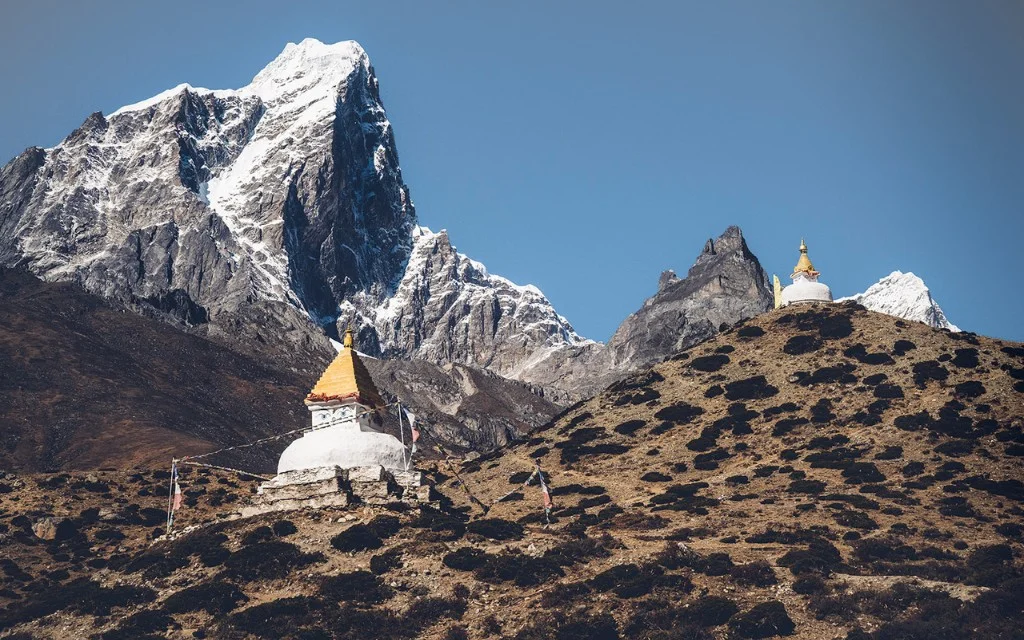
Visit ancient monasteries, such as the Pangboche Monastery, and witness the traditional Sherpa way of life.
Explore vibrant markets offering handmade handicrafts, yak wool products, and local delicacies like momos.
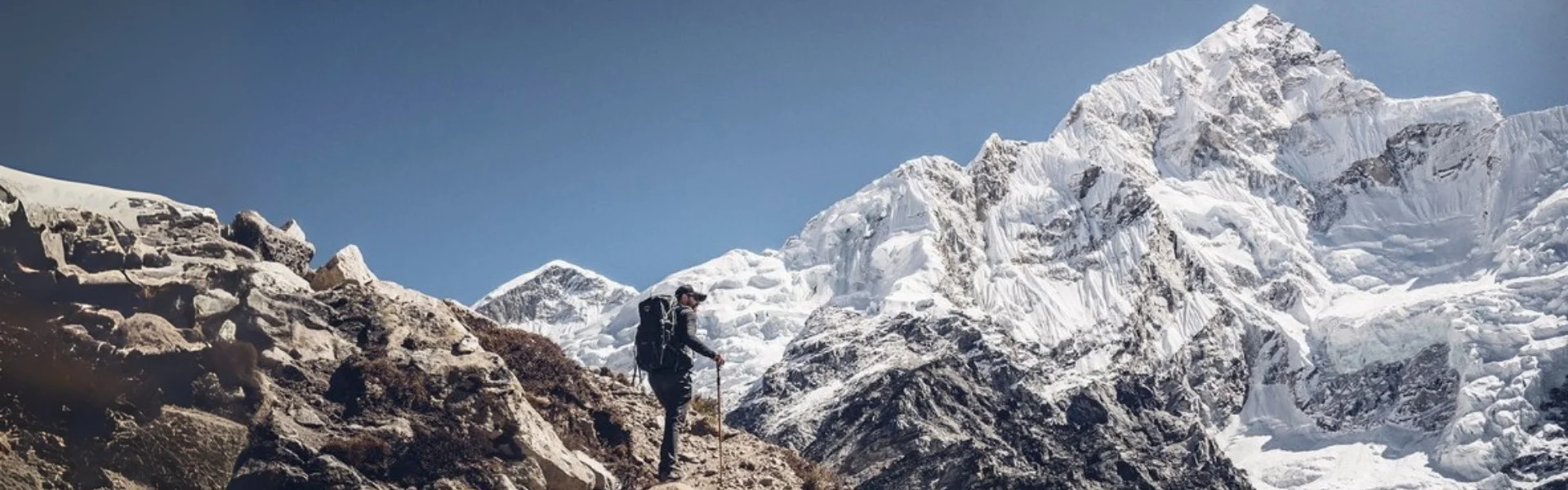
Reach the legendary Everest Base Camp, where climbers prepare for the summit.
Trek to Kala Patthar for the best panoramic view of Mount Everest.
Trek through lush rhododendron, juniper, and pine forests, and spot Himalayan wildlife such as musk deer, pheasants, and the national bird, Danphe (Himalayan Monal).
Take in breathtaking views from places like the Everest View Hotel and Khumjung Village, which offer a chance to rest and acclimatize and splendid panoramic views of the surrounding peaks, including Mount Everest.
Visit the Hillary School in Khumjung and learn about Sir Edmund Hillary's remarkable contribution to the region.
Description Of Ama Dablam with Everest Base Camp Trek- 14 Days
The Ama Dablam with Everest Base Camp Trek is an inspiring journey of discovery into the fantastic Everest region of Nepal that incorporates cultural experience, amazing views of mountains & landscapes, and adventure. Though it is a moderate trek, both beginners and professional hikers can go ahead as it does not last long hours, and the rewards are remarkable top-end views.
The trail passes through colourful Sherpa settlements such as Namche Bazaar (3,440m/11,286ft) and Phortse village (3,180m/12,500ft), Dingboche (4,410m/14,46ft), where you can sample the much-cherished Nepalese hospitality, colourful monasteries, and rural Himalayan culture. Even during the journey to the Ama Dablam Base Camp (4,570m/14993ft), you will have an inspiring view of part of the great chain of mountains, such as Everest, Lhotse (8,516m/27,940ft), and Nuptse (7,861m/25,791ft).
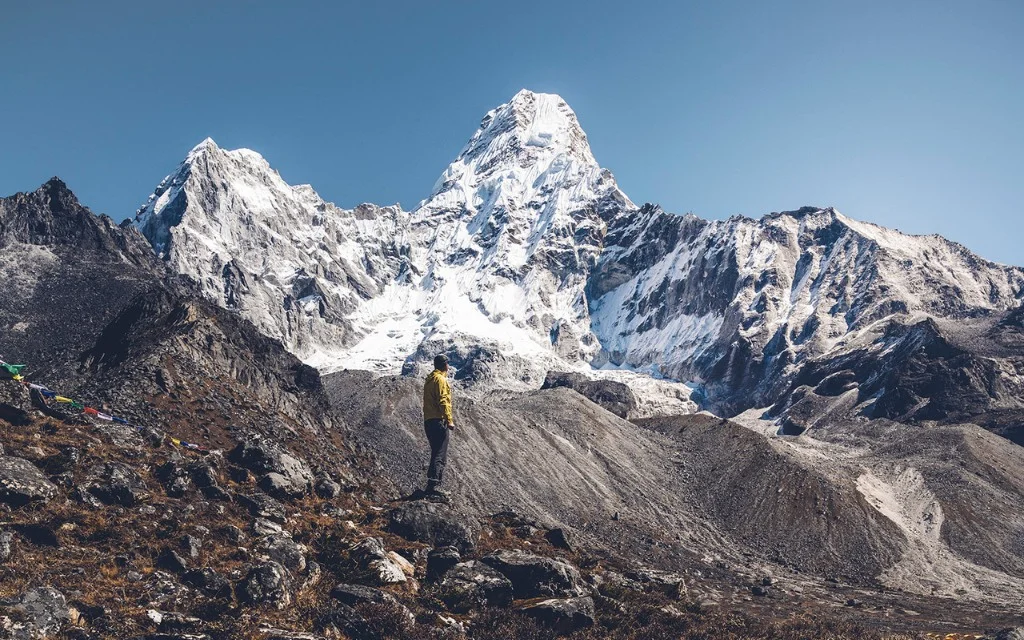
The Ama Dablam Base Camp(4,570m/14,993ft) is a nice and different touch, with less tourism and tourist infrastructure and fantastic views of the Ama Dablam, also known as the “Matterhorn of the Himalayas.” This 14-day journey trek is impressive because it offers adventure, great culture, and incredible natural scenery, making it a fantastic Himalayan trek.
How does the 14-day Ama Dablam with Everest Base Camp Trek start and end?
The Ama Dablam with Everest Base Camp Trek itinerary starts as soon as you enter the Tribhuvan International Airport terminal in Kathmandu; the start of every classic journey begins. The Yeti Hikes representative will greet you upon arrival and drive you to your lodging. After this first meal with us, the Welcome Breakfast, the guide will review the required gear and give a general overview of the upcoming treks. The remainder of the day can be spent buying other essentials for the cruise and sampling the city's cuisine and culture.
Next, you’ll have a scenic flight from Kathmandu to Lukla, a colourful village destination in the Everest area. The spectacular trail from Lukla goes through the familiar villages of Phakding, the lively Sherpa city of Namche Bazaar, with excellent views of the mountains nearby. The trek progresses further down the side of the mountain through forests and over bridges with prayer flags. It then goes to Tengboche, a vital monastery circuit with excellent views of Ama Dablam (6,812m/22,349ft) and Everest (5,364m/17,598ft).
The tour finishes with a walk to the Ama Dablam Base Camp (4,570m/14,993ft), which affords trekkers a close view of the mountain peak. The return trip takes the same route back to Lukla – again giving the client a second chance to explore the vibrant Sherpa culture and glance again at the magnificent view of the mountains before heading back home. The adventure ends with flying back to Kathmandu from Lukla on the final day of this wonderful Himalayan experience. We will say goodbye with big fat cheers, concluding the 14-day Ama Dablam with Everest Base Camp Trek journey.
Ama Dablam with Everest Base Camp Trek Distance and Altitude Coverage
Day | From | To | Altitude (m) | Distance (km) | Time (hrs) | Elevation Gain (m) | Elevation Drop (m) |
1 | Kathmandu | Kathmandu | 1,400 | - | - | - | - |
2 | Kathmandu | Phakding | 2,610 | 8 | 3-4 | +200 | -940 |
3 | Phakding | Namche Bazaar | 3,440 | 10 | 5-6 | +830 | -0 |
4 | Acclimatization | Namche Bazaar | 3,440 | 5 (side trek) | 3-4 | +400 (side trek) | -400 (side trek) |
5 | Namche Bazaar | Phortse | 3,810 | 9 | 5-6 | +600 | -230 |
6 | Phortse | Pangboche | 3,930 | 6 | 4-5 | +300 | -180 |
7 | Pangboche | Ama Dablam Base Camp | 4,570 | 8 (round trip) | 5-6 | +640 | -640 |
8 | Pangboche | Dingboche | 4,410 | 6 | 3-4 | +480 | -0 |
9 | Dingboche | Lobuche | 4,910 | 8 | 4-5 | +500 | -0 |
10 | Lobuche | Everest Base Camp | 5,364 | 12 | 6-8 | +454 | -454 |
| Everest Base Camp | Gorak Shep | 5,164 | 12 (round trip) | - | - | - |
11 | Gorak Shep | Kala Patthar | 5,550 | 4 | 3-4 | +400 | -400 |
| Kala Patthar | Pheriche | 4,371 | 12 | 6-7 | - | - |
12 | Pheriche | Namche Bazaar | 3,440 | 15 | 6-7 | +200 | -1,030 |
13 | Namche Bazaar | Lukla | 2,860 | 16 | 6-7 | +200 | -780 |
14 | Lukla | Kathmandu | 1,400 | - | - | - | - |
What accommodations are available at the Everest Base Camp and Ama Dablam Trek Accommodation?
The Ama Dablam with Everest Base Camp Trek shelters from typical and minimalistic tea houses and lodges to standard and better class guest houses, respectively in accordance with the altitude, location and price criterion.
The Accommodation of Kathmandu
Overall, you will spend 2 nights in one of our selected hotels, where we provide 3-star equivalent accommodations in the heart of Thamel, the travellers’ zone. Hotels include:
Thamel Park Hotel
Lo Mustang Hotel
Ramada Encore Hotel
Moonlight Hotel
Your inn comprises a shared room, a two-person room, welcome and farewell dinner. At least one private bath is enclosed in every room with a large TV and adequate wardrobe space for luggage. If you want single accommodation or a group/single package, they can choose a 4 or 5-star hotel at an extra price.
The Accommodation during the Ama Dablam with Everest Base Camp Trek
Many teahouses and lodges are available to trekkers throughout the route. They provide the bare necessities, such as dormitories or private accommodations with shared bath facilities. Even though facilities differ, bedding, hot showers, and heat for the living room and dinner area are common, and trekkers can move around and socialize after a tiring day of adventure. The dining areas offer several local and worldwide meals; trekkers can taste Sherpa Cuisine.
Since tea houses are located in various villages, including Namche Bazaar, Pangboche, Dingboche, and Lobuche, they help travellers rest and acclimate. In conclusion, teahouses allow one to get acquainted with the profiles and cosiness of the districts one passes through and get a comfortable place to rest during the entire route.
What is the best season for Ama Dablam with Everest Base Camp Trek
Spring and autumn are the best seasons for the Everest Base Camp trek(5,364m/17,598ft) with Ama Dablam(4,570m/14,993ft) because of the favourable weather and temperatures that make seeing Nepal worthwhile.
Spring (March-May)
At low elevations, the typical daytime temperature is between 10°C and 15°C (50°F and 59°F), however during the spring, the nighttime temperature can drop to between 5°C and 15°C (41°F and 59°F). This will allow you to witness the rapid growth of rhododendrons, wildflowers, and other vegetation, particularly in the lower elevations. The chance to see the Himalayan Tahr and Musk Deer and various bird species will allow you to experience increased wildlife activity. In addition to local festival festivities, farming methods, and seasonal lifestyles, you will have the opportunity to observe Buddha Jayanti. This significant Buddhist holiday infuses the monasteries in the Everest Region with vitality and colour.
This season is when the trails are most accessible, and there may occasionally be light precipitation. You can see Mount Everest(8,848m/29,032ft), Lhotse(8,516m/27,940ft), Ama Dablam(6,812m/22,349ft), and numerous other magnificent peaks, and the villages appear cleaner.
Autumn (September-November)
The pathways are less slick when they dry up after several dew hours since the autumn season receives less precipitation than the monsoon. In lowlands, fall daytime temperatures range from 10 to 20 degrees Celsius (50 to 68 degrees Fahrenheit), while nighttime lows are roughly 0 to 10 degrees Celsius (32 to 50 degrees Fahrenheit). The winter Himalayan Tahr and several bird species are visible, and the wildlife seems busy. Because the sky is visible, several of the most prominent mountains, including Mount Everest(8,848m/29,032ft), Lhotse(8,516m/27,940ft), and Ama Dablam(6,812m/22,349ft), may be seen well. Autumn is unique in terms of culture, especially during the festivals of Dashain and Tihar, celebrated with great delight and represented by the seasons' colours.
These fairs bring local colours and vitality to communities and monasteries. This season is ideal for walking and exploring the region's natural splendour because the paths are often easier to navigate and passable even during this time of year. Light rain is possible, but it doesn't happen usually and doesn't stop people from going outside.
The adventure is typically completed in the spring and autumn because of the stable temperatures and the clear skies that provide a good view of the mountains. Frequent rains during the monsoon season will cause the routes to become slick, raising the risk of landslides and reducing visibility. Conversely, the winter months are marked by bitterly cold temperatures, heavy snowfall, and unfavourable weather, which makes trekking more complex and even deadly. The optimal seasons for a safer and more enjoyable vacation are spring and fall because mountain conditions are unsuitable for trekking in both seasons.
Food options during an Everest Base Camp trek with Ama Dablam
Throughout the Ama Dablam with Everest Base Camp Trek, you can purchase food at different teahouses and lodges along the trail. The basic food of this trek is a simple lentil soup, rice, and vegetables cooked with curry, also called ‘Dal Bhatt’. You will also be served other fast foods and takes, including noodles, momos, potatoes, fruits, hot beverages, etc. Since the options could be a little scarce, it is also recommended that you pack some energy bars, nuts, chocolates, and biscuits with you.
You'll find various food options at teahouses and lodges along the trek.
Category | Food Items |
|---|---|
Breakfast | Porridge/Oatmeal, Pancakes, Egg Dishes, Bread and Jam |
Lunch | Noodles, Sandwiches, Rice Dishes, Mo: Mo, Bread, Sel Roti, Fresh Fruits, Thukpa |
Dinner | Dal Bhat, Rice and Curry, Potato Items |
Hot Beverages | Tea, Coffee, Hot Chocolate |
Cold Beverages | Soft Drinks, Bottled Water, Fresh Fruit Juice |
As the options may be limited, it is recommended that you carry bottled water for drinking, energy bars, nuts, chocolates, and biscuits. Alcohol drinks are also available but not favoured as they may increase the risk of AMS and dehydration.
What are the available Toilets and Bathrooms during Ama Dablam with Everest Base Camp Trek?
The available Toilets and Bathrooms during Ama Dablam with Everest Base Camp Trek is very basic yet comfortable. There might not be water accessible for hand washing or flushing. Therefore, it is necessary to use alcohol-based hand sanitizer or wash their hands with water readily available at the proper times.
Frequently included showers and spaces for washing also differ significantly. Many teahouses in lower locations, such as Namche Bazaar, provide hot showers, often at an extra cost, using gas-powered systems or electric heaters. These amenities might also have running water and sinks in the Western style. However, the availability of hot water decreases as you go higher, and some tea houses might only have cold water or no running water at all.
How secure is 14 days Ama Dablam with Everest Base Camp Trek?
First, the Yeti Hikes team recommends the early bird season, spring, and autumn. Safety is the top priority in the hiking area, and the Everest Base Camp Trek (5,364m/17,598ft) with Ama Dablam journey is incredibly enjoyable and unpredictable.
Specifically, keeping an eye on the weather calendar to observe any changes is one of the easier ways to prepare for bad weather. It is recommended to ensure that one has the appropriate and necessary goods, such as suitable clothing, preferably warm and waterproof because one cannot foresee when a strong shower will occur.
Second, one significant risk factor to consider is Altitude Mountain Sickness (AMS). To reduce this risk, it is critical to pay attention to the body and become familiar with warning signs like headache and lightheadedness.
This adventure requires mental and physical endurance. Exercise from different sports might help you start by improving your physical stability. All you have to do is unwind and concentrate on having fun and caring for your health. Because physical strength requires self-assurance, attention, and enthusiasm, stretching, breathing, and meditation are necessary.
There aren't many trekking trails here, and they're not readily transferable on maps. Therefore, you must always have a first aid package. Numerous unavoidable injuries and critical conditions exist; however, sprains of the joints are common and can be treated with first aid items. Travel insurance is required because of the uncharted territory and the lack of adequate medical facilities.
Outline itinerary of Ama Dablam with Everest Base Camp Trek
Day 1: Arrive in Kathmandu and transfer to the hotel
Day 2: Flight from Kathmandu to Lukla and trek to Phakding
Day 3: Trek to Namche Bazaar
Day 4: Acclimatization at Namche Bazaar
Day 5: Trek to Phortse village
Day 6: Trek to Pangboche
Day 7: Trek to Ama Dablam base camp and trek back to Pangboche
Day 8: Trek to Dingboche
Day 9: Trek to Lobuche
Day 10: Trek to Gorak Shep, continue to Everest Base Camp and back to Gorak Shep
Day 11: Trek to Kala Patthar and trek to Pheriche
Day 12: Trek to Namche Bazaar
Day 13: Trek to Lukla
Day 14: Flight from Lukla to Kathmandu
Itinerary Of Ama Dablam with Everest Base Camp Trek- 14 Days
Your trip will begin as soon as you land at Kathmandu's Tribhuvan International Airport (TIA), where our Yeti Hikes personnel will greet you. We will take you to the assigned hotel and warmly welcome you. A representative from our office will brief you on the required equipment and information for this journey. You have the remaining evening to yourself. Explore the nearby markets and shops, and please come back and enjoy your meal!
The second day of your trip begins with a flight from Kathmandu to Lukla, which takes around 30 minutes at Lukla's Tenzing Hillary Airport. Although Lukla is a small community with fewer than five hundred residents, hikers are the intended audience.
After breakfast and meeting the other crew members, you will head to your destination for the day. In the following five hours, you will arrive at this lovely village, Phakding, after a journey filled with ups and downs, passing by numerous enormous yaks, terraced hillsides, stone stairs, and a suspension bridge over the Dudh Koshi River.
After a brief lunch break, you will continue uphill into Monjo and Jorsale. You will continue your ascent by crossing the well-known Hillary Bridge. Following the Dudh Koshi River and the entrance to Everest National Park, the route continues through a stunning pine forest. You'll go by gorgeous, verdant rhododendron and pine forests and have the first sight of Mount Everest after the breathtaking views of Thamserku Peak, Khumjung Peak, Kongde Peak, and many more. After travelling north for four to five hours, you will eventually arrive at the Namche Bazar, which is 3,438 meters (11,280 feet) high. The first day of the hike will conclude with a meal of regional Sherpa cuisine.
The journey continues as you pass the entrance to Everest National Park, the Dudh Koshi River, and a lovely pine forest. You will pass by suspension bridges, riverbanks, and gorgeous, verdant rhododendron and pine forests. After taking in the breathtaking views of Thamserku, Khumjung Peak, Kongde Peak, and numerous more, you will continue your ascent via the well-known Hillary suspension bridge.
After walking for five to six hours, you will arrive at the Namche Bazar, 3445 meters high.
Namche Bazaar, an agricultural and trading Sherpa town, is the entrance to the Everest region in Nepal's Himalayas. Sitting on a half-moon curve of a hill, it gives spectacular views of peaks, including Thamserku and Kongde Ri. It is a cultural centre showcasing Sherpa culture and a base for climbers like you, with facilities like bakeries, cafes, and lodges.
The busy local markets for handicraft items for sale, yak wool cloths and other regional specialities can be visited at night. Try a hot coffee or tea and sit in a comfortable cafe or bakery eating dishes like momos or butter tea. You may also want to visit the local bars for a laid-back environment, share folk tales with other climbers, or enjoy the indigenous constellations right on the roof of the Himalayas.
You must halt your journey because the slow rise in altitude will negatively impact your health and your experience. However, besides breakfast, you have a choice or two of easy acclimatization treks.
The first involves a three—to four-hour round-trip journey to the Everest View Hotel, where you can recuperate with tea or coffee and be rewarded with a surrealistic view of Ama Dablam, Thamserku, Mt. Everest, and Mt. Lhotse. Additionally, Sherpa dishes and continental lunches are available there.
Khumjung Village is an additional hiking destination that requires three to four hours. You will also interact with the Sherpa people and see the Hillary School and Khumjung Monastery. The tea establishments around the village serve lunches that you are accustomed to.
Since the afternoon is free, you can explore the area and visit the Sherpa Culture Museum, which details the Sherpa people's ancient trade and culture. A peaceful dinner at your teahouse will help you prepare for the next part of the adventure.
Phortse village is from Namche Bazaar, which is steep towards Kyangjuma and has a robust view of Ama Dablam, Thamserku, and Everest. You will detour from the main trail to the Everest Base Camp directly towards Mong La, which consists of a few cliffs with prayer flags and shortens. The trek down to Phortse Tenga goes through the juniper and rhododendron forests, from where you may get a glimpse into the wildlife of the Himalayas; the musk deer and the Danphe are the national symbols of Nepal. Following the Dudh Koshi River crossing is a steep ascent to Phortse Village – a picturesque place with typical Sherpa houses and lovely fields.
Phortse Village is a less hassled Sherpa Village settled at 3,950 meters in the Khumbu region of Nepal. It provides panoramic views of Ama Dablam, Thamserku, and other mountains of the great Himalayas. The village is oriented toward Sherpa culture and has well-built stone homes and peaceful fields.
Compared to more frequented locations such as Namche Bazaar, Phortse village is attractive as an example of mountainous culture. It also hosts the Khumbu Climbing Center, which trains climbers from the region and the world. You can visit the village's monasteries, meet the hospitable Sherpa people, and marvel at natural beauty. You can also have dinner with a view over the Taboche and Cholatse mountains, among others.
The hiking path to Pangboche is quite gradual from Phortse Village. You'll cross blue bridges along the hillside with mani walls and small chortens, giving an initial glimpse of the place's spiritual and cultural ethos. The trail proceeds further into more severely trodden rhododendrons and juniper jungles, where Himalayan wildlife like musk deer and pheasants are more easily spotted.
Fairly soon, you descend for some time, and then you will have to cross a suspension bridge over the Imja River—fascinating, with a stunning view of the rapidly flowing water beneath you. The trail then moves gradually towards Shomare, a tiny settlement famous for yaks and impressive views of Ama Dablam, Thamserku, and Kangtega.
After Shomare, the land is less mountainous and more of an alpine zone, with less vegetation and more meadows and plateaus where yaks graze. From there, the trail goes to Pangboche, the highest Sherpa village, at 3,985 meters above sea level. Here, you can engage with the vernacular community, learn their way of life in the region, and get a view of the fantastic mountain terrains.
The village is a famous cultural destination that hosts the oldest Pangboche Monastery, which is believed to have a piece of the yeti. The town is remote and quiet, where you can witness the accurate Sherpa way of life amidst high alpine pastures with yaks grazing.
The trek deviates from the main Everest Base Camp trail, where the first fork to the Ama Dablam Base Camp is taken at Pangboche. The trail gradually climbs above grassy Yak pastures and occasional shrubs, with views of the Imja Valley and the surrounding hills capped with snow. Continuing along the trail, the land becomes a little more barren, and the massive Mount Ama Dablam comes into view. On your way, tumbling streams and prayer flags give the desolate views a religious feel.
The route from the village of Pangboche to Dingboche is upwards through the Imja Khola Valley. You shall find at least five suspension bridges, each overlooking the river below and surrounding mountain ranges. This trail passes through the alpine meadows and gives a brief, breathtaking look at the Ama Dablam, Lhotse and Island Peak. During the trip to Dingboche, you will cross a small Sherpa village like Orsho, where you can usually pause and take a cup of tea but spend the night in the lodging houses. These villages give the best chance to directly communicate with the locals and spend moments in the most serene environment in the Khumbu.
Further on the trail, the whole view starts to shift. The aerial conditions evolve and open with less vegetation than the alpine standards. A few feet ahead, the rocks pave the way upward; few trees and many open fields show that one is on a higher ground. A cemented trail passes through the region by the stone walls constructed by the Sherpa people to safeguard crops like barley, potatoes and buckwheat, which are grown in the area against the unforgiving wind. The route is spectacular because there are no barriers between you and the mountains; you are wished by giants such as Ama Dablam and Island Peak all day.
After changing altitude for about several hours, you will arrive at Dingboche. Located high on a barren and arid slope of Kala Pattar, Dingboche is well-known for its eye-catching stone-walled fields against the backdrop of colourful crops that protect them against the turbulence of the wind. It's a perfect place to rest and acclimate because the altitude shock begins to kick in here.
As stated, take a bottle of brandy wine to Dingboche and enjoy the striking mountain scenery for a day or two. The place offers a walk around the village, a small monastery, and a cup of tea in traditional tea houses.
The next stop will be the core of Khumbu, Lobuche, around 4940 m/16,208 ft elevation. Most of the time, it will be an ascent, though not very steep; however, due to this elevation, you might find breathing difficult. It passes by breathtaking views; you'll witness magnificent peaks like Taboche. You will traverse the side moraine of the Khumbu Glacier and the stone memorials erected to honour the memories of climbers who have passed away, adorned by the vibrant prayer flags at Thukla Pass. You will take a short break.
You find yourself in the Lobuche Village region, navigating rocky paths and sometimes steep inclines.
The village is a haven for trekkers like you on their way to upper regions, with facilities to accommodate them for a certain period before proceeding. The surrounding area of Lobuche has strong rocky and glacier features that beautify the region. It is also helpful as an acclimatization point in preparation for arrival at Everest Base Camp. Featuring several guesthouses and lodges and breathtaking views of the nearby peaks, you can savour lunch and take a leisurely walk or relax. Later, you will eat your dinner and return to sleep.
Time goes by unnoticed, and here you are on the tenth day. Right after your early breakfast, you must head towards Gorak Shep (5,164m/ 16,942ft), the final stopping point on this camping route. The trail is relatively short but includes steep sections, jagged stones, and elevated altitudes. There is a fantastic chance to enjoy stunning vistas of the magnificent Khumbu Glacier and the Khumbu Icefall, which are always included in the scenery.
Upon arriving at Gorak Shep, it's crucial to allow for rest and time before making the final effort to reach the EBC. The path is quite essential, noticeably steep, and demands considerable effort due to the rocky ground. While camping here, you find yourself surrounded by climbers and adventurers from around the globe, with a scenic view of Mt. Everest, Mt. Nuptse, Mountain Pumori, and Mt. Khumbutse.
Upon arriving at the base camp, you will spend roughly one hour capturing photos and soaking in the tranquillity before returning to Gorak Shep. The journey back lets you view the landscape in a wholly new manner as the mountain changes right before your eyes at sunset. In the end, upon arriving at Gorak Shep, you will enjoy a hot dinner and prepare for the final stage of the journey.
The journey to your Everest Base Camp is close to concluding. You'll enjoy breakfast with a stunning sunrise view of the massive mountains. Today, you will trek to the tallest peak, Kala Patthar (5545 m / 18193 ft). It is also the most significant elevation you can ascend without a permit in Nepal and experience a close, unobstructed view of Mount Everest. Now is the moment to capture as many pictures as you like and wander through the surroundings before going down to Gorak Shep. During your descent, there will be a short lunch break; afterwards, you'll prepare to begin your journey down to Pheriche.
In the evening, when you are welcome at Pheriche after trekking the whole day, you will feel the serenity of the place. Located in the mountains, the superb climate and the many majestic rock formations offer the best scenery for individuals.
There are some great walking trails in this area for those who want to take it easy and relax after the climb or are waiting to re-acclimatize to the high altitude; you can take a stroll around the village and enjoy the views of the towering mountains at close quarters outside of the town. It doesn't rain at night and provides prominent nights for stargazing, where you can see constellations.
After breakfast, you will start your journey early in the morning, and the initial phase along the trail features gently sloping paths that meander through forests, gradually descending towards the Dudh Koshi River. You will traverse several suspension bridges and see stunning hills and valleys on either side. You'll pass through minor villages in Thame and stop for tea. While the journey from here to Namche is a comparatively easy trek, the route will be enriched by the vibrant surroundings of a Sherpa settlement known as the entrance to the Everest Region. The return trip is relatively straightforward and lasts around five to six hours, primarily involving descent.
Trek to Lukla marks the final day of exploration in the Everest Region. Following a light breakfast, your day will begin with a relaxed path from Namche Bazaar, passing through pine tree forests and alongside captivating rhododendron bushes. This path to Lukla offers stunning vistas of peaks like Ama-Dablam, Mt. Everest, and the surrounding valleys. You'll stroll by nearby tea houses and stop in for lunch. Upon emerging in this manner, you persist in your descent, traversing suspension bridges and ultimately reaching the Dudh Koshi River. It continues for roughly 6 to 7 hours.
We suggest you enjoy a relaxed stroll around this lively gateway to the Everest Region—Lukla in the evening. Take some time to appreciate what the town you were introduced to has in store and enhance your triumphant journey. Kindly do not squander a second of the anticipated enjoyment, and seize every one of those timeless instances. You should spend your final night in the Himalayan areas of Nepal, called the Everest Region, before heading to Kathmandu. Take time to rest and prepare to say goodbye to the place.
The journey back to Kathmandu has finally begun. After shopping in Lukla village, you will take a flight to Kathmandu. Your journey will conclude when you arrive at your final destination, Tribhuvan International Airport (TIA) in Kathmandu, where our Yeti Hikes team will greet you. We will take you to the nearby designated hotel and warmly offer you a Farewell Dinner. We'll provide our service to you for the final time on the 14-day Ama Dablam Base Camp. You and I, together, with an incredible, unforgettable, and adventurous experience, will say farewell and Bon Voyage for your next journey. We will consistently anticipate our upcoming journey together!
What's Included In Ama Dablam with Everest Base Camp Trek- 14 Days
Included
All airport pick up drop by private vehicle - for both international and domestic flights.
Welcome dinner in an authentic restaurant.
Twin/double sharing accommodation in BB in Kathmandu.
Guided sightseeing tours in Kathmandu with private vehicle.
National Park entrance fee and Trekkers' Information Management System, TIMS card.
A highly experienced, helpful, knowledgeable, friendly, English-speaking, well-trained, Government-licensed guide. The price includes his salary, food, drinks, accommodation, transport, and insurance.
02 guests to 01 porter with their insurance, salary, food, accommodation, and equipment.
We provide an assistant guide, his salary, food, drinks, accommodation, transport, and insurance walking with a group to support where necessary as per the group size.
Accommodation in the mountain during the trekking period.
Three meals a day; breakfast, lunch and dinner and tea/coffee during the trekking.
Safe drinking water.
Flight from Kathmandu/Ramechhap to Lukla and return back.
Welcome dinner in an authentic restaurant.
First add kit box.
Yeti Hikes's sleeping bag, down jackets, T-shirt, cap, duffle bags, city and trekking route maps – if necessary.
Arrangement of emergency evacuation service (should have insurance for emergency evacuation and will be paid by your travel insurance company).
Oxymeter to check your pulse and oxygen saturation and heart rate-twice daily during the trek-a very useful way to check AMS symptoms. This helps to make sure that your trek is in the safest hands possible.
One-hour complimentary spa/massage in Kathmandu after the trek.
All the applicable government and local taxes as per the itinerary.
Excluded
The fees associated with your Nepal visa.
All international air fares to and from Kathmandu.
Lunch and supper in Kathmandu.
Insurance for helicopter evacuation, as well as personal travel and health insurance.
Extra nights of accommodation, lunch, and dinner in the city may be required in the event of an early arrival or late departure, as well as an early return from a mountain or trekking excursion for any reason, exceeding the specified itinerary timeframe. We are able to assist you in securing additional nights of lodging.
Your personal expenses, including laundry, baggage charges, phone calls, battery recharges, bar and beverage bills, boiled or bottle water, hot and cold showers and an additional attendant, are as follows.
The tips for the trekking personnel and drivers.
Additional expenses that arise as a result of flight delays, strikes, weather conditions, or any other event beyond our control.
Additional Information Of Ama Dablam with Everest Base Camp Trek- 14 Days
Detailed Information about flying into Lukla
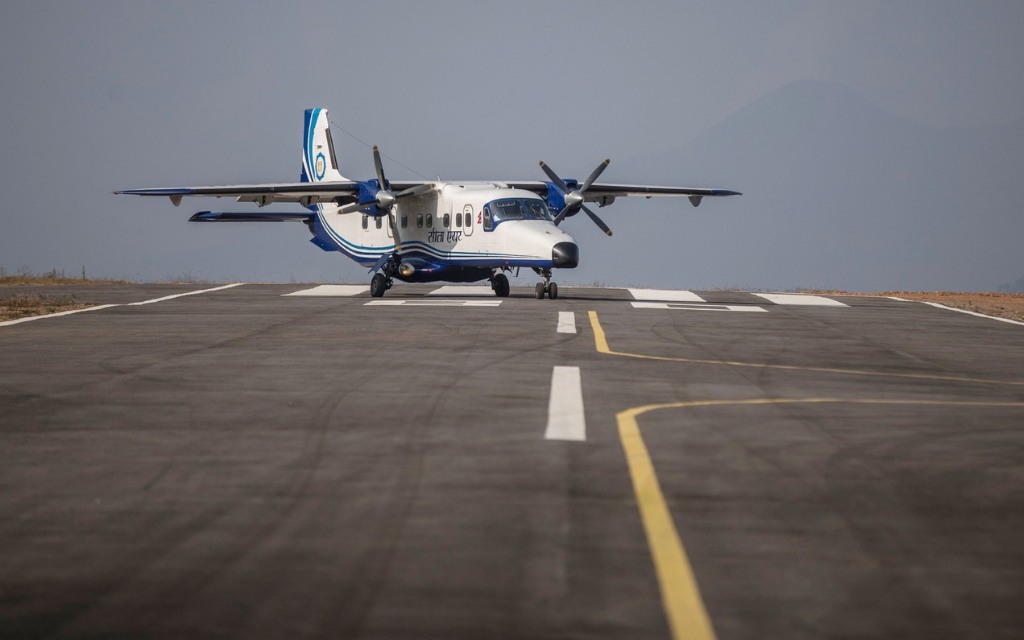
Known as the entryway to "Mount Everest," Lukla Airport is situated in the Himalayas, an incredibly difficult altitude. Because of its small runway and the strip's proximity to a cliff, every landing feels like an exhilarating adventure. You will experience excitement upon seeing the snow-capped mountains and thinking about the next adventure.
Direct flight from Kathmandu to Lukla
The Kathmandu to Lukla flights run typically during off-peak months. The number of passengers each month impacts this choice.
Another name for Tenzing Hillary Airport is "The Airport of the Mountains," the entry point to Mount Everest. It is situated in the Himalayas, an almost unthinkably challenging altitude. Each landing feels like an adventure because of the runway's modest size and the strip's overall proximity to a cliff. The sight of ice mountains and the anticipation of the hike the following day will fill you with enthusiasm.
Lukla flight from Ramechhap/ Manthali Airport
Due to increased air traffic, Lukla flights from Kathmandu to Ramechhap/Manthali will be moved during the busiest months of March, April, May, October, and November.
Thankfully, there is an alternative path for those who wish to begin their trip from Ramechhap/Manthali. Travelling from Kathmandu to the airport typically takes five to six hours, after which you will fly to Lukla for twenty minutes. In addition to avoiding the crowds, flights are occasionally diverted to Ramechhap during the busiest trekking months of March-May and October-November due to the large number of aircraft at the Kathmandu airport.
The only direct flight from Kathmandu to Lukla is the one available. During the off-season, you can take a direct flight from Kathmandu Airport to Lukla Airport; the trip will take roughly thirty-five minutes.
It is important to note that flights may vary depending on the airline and certain unfavorable elements, such as inclement weather, runway issues, etc. For this reason, Yeti Hikes advises extending your journey by one or more days.
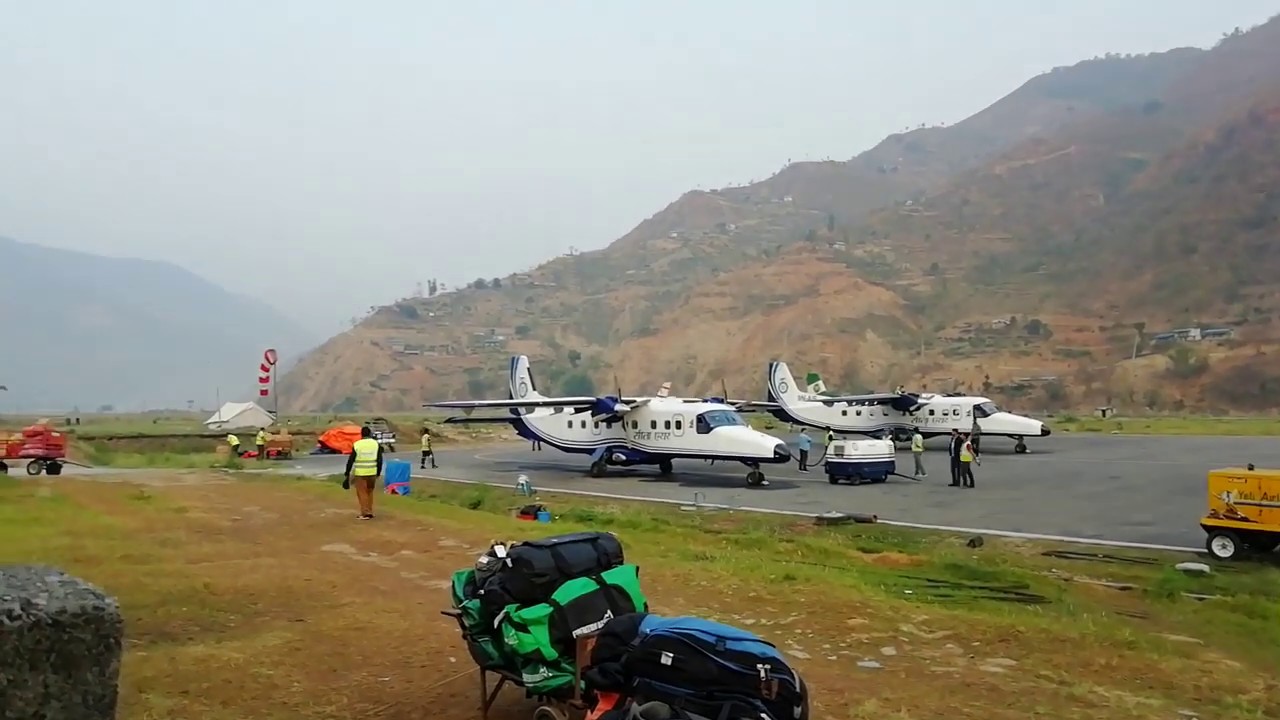
Baggage allowances in Lukla's flight
Taking the flight to Lukla requires using a smaller aircraft; either way, the airline requires you to pack lightly for safety reasons.
Total Baggage Limit: 15 kg (33 lbs) per person
Checked Luggage: 10 kg (22 lbs)
Carry-On: 5 kg (11 lbs)
Space availability may be achieved at an additional expense. However, depending on the baggage's use, stopping at a 15 kg weight limit is best.
How to prevent altitude sickness (AMS) during the Ama Dablam with Everest Base Camp Trek?
Acute Mountain Sickness (AMS) is one of the primary concerns for every traveller. Prevention is possible, but some solutions decrease it significantly enough to be worth considering.
The common symptoms of AMS are as follows:
Headache.
Nausea and Vomiting.
Dizziness.
Fatigue.
Loss of Appetite.
Difficulty in Sleep.
Increase in Heart Rate.
Swelled Body Parts.
Severe AMS can lead to life-threatening conditions and complications like High Altitude Pulmonary Edema (HAPE) or High Altitude Cerebral Edema (HACE).
Avoiding it is crucial, but some effective preventions (strategies) can minimize it.
Acclimatization.
Stay Hydrated.
Proper Nutrition.
Physical stability and medications.
Monitor your body.
Travel Insurance for the Everest Base Camp trek with Ama Dablam
The trekking routes are off-track and have bad trail connectivity and, once more, insufficient transportation feasibility. Typical damages are standard, but there are numerous sheer accidents only, and then there are such states or passings. Therefore, it is compulsory to purchase travelling insurance because of such places and only elementary physician abilities. For probable, severe, or crucial casualties which may require a patient to be moved to Kathmandu, it requires so much time using road access; thus, roadways (carriage, trucking), insurance but for lives-threatening emergencies, it has to be Airways (helicopter and aeroplane), insurance.
Why is it important?
For High-altitude Coverage.
Medical Expenses & Evacuation.
Trip Cancellation & Interruption.
Lost or Delayed Baggage.
Personal Liability.
Repatriation.
Recommended Providers
Many insurance providers offer travel insurance tailored to high-altitude trekking in Nepal, such as:
Gear List Of Ama Dablam with Everest Base Camp Trek- 14 Days
Clothing
Base Layers
Thermal tops and bottoms (for warmth at night).
Moisture-wicking t-shirts (2-3, quick-dry fabric).
Lightweight trekking pants (convertible into shorts if possible).
Insulating Layers
Fleece jacket or sweater.
Insulated down jacket (for colder nights and higher altitudes).
Outer Layers
Waterproof and windproof jacket.
Waterproof pants.
Hiking Socks
Wool or synthetic socks (3-4 pairs).
Liner socks (optional, to prevent blisters).
Accessories
Hat (for sun protection).
Beanie or warm hat (for higher altitudes).
Buff or scarf (to protect against wind and dust).
Gloves (both lightweight and insulated if possible).
Footwear
Hiking Boots
Sturdy, waterproof trekking boots (well-broken-in).
Camp Shoes
Lightweight sandals or camp shoes for resting in the evenings.
Backpacks
Daypack (20-30L)
For essentials like snacks, water, and rain gear.
Duffel Bag (if using porters)
You may need a duffel for the bulk of your gear if you’re hiring porters.
Trekking Gear
Trekking Poles
Helpful for balance and reducing stress on knees.
Sleeping Bag
Rated for temperatures below freezing (around -10°C/14°F).
Water Bottles
Reusable bottles or a hydration bladder (2-3 liters capacity).
Water Purification
Tablets, drops, or a portable filter to avoid purchasing bottled water.
Headlamp
With extra batteries (essential for early starts or evening walks).
Sunglasses
UV protection to safeguard against strong sunlight at altitude.
Trekking Map and Compass
Optional, but can help you follow along with the route.
Toiletries
Sunscreen (SPF 50+)
Lip Balm (with SPF)
Toilet Paper
Wet Wipes
Hand Sanitizer
Biodegradable Soap/Shampoo
Toothbrush and Toothpaste
First Aid & Medication
Personal Medication
Bring a sufficient supply of any prescribed medications.
Basic First Aid Kit
Painkillers, blister care (like moleskin), band-aids, and antiseptic cream.
Altitude Sickness Medication
Such as acetazolamide (consult your doctor before taking).
Snacks and Energy Foods
High-Energy Snacks
Protein bars, nuts, dried fruit, chocolate, or energy gels for extra fuel on the trail.
Electronics
Camera/Phone
For capturing memories.
Portable Charger/Power Bank
Charging points may be scarce and expensive.
Spare Batteries
Cold weather can drain batteries quickly.
Miscellaneous
Money
Carry enough cash for food, charging, and tips in remote areas.
Trekking Permits and Passport Copies
Ensure you have copies of your TIMS Card, Khumbu Rural Municipality permit and Sagarmatha National Park entry permit as well as your passport.
Small Locks
For your bags.