


Overview of Langtang Valley Trek- 8 days
Highlights
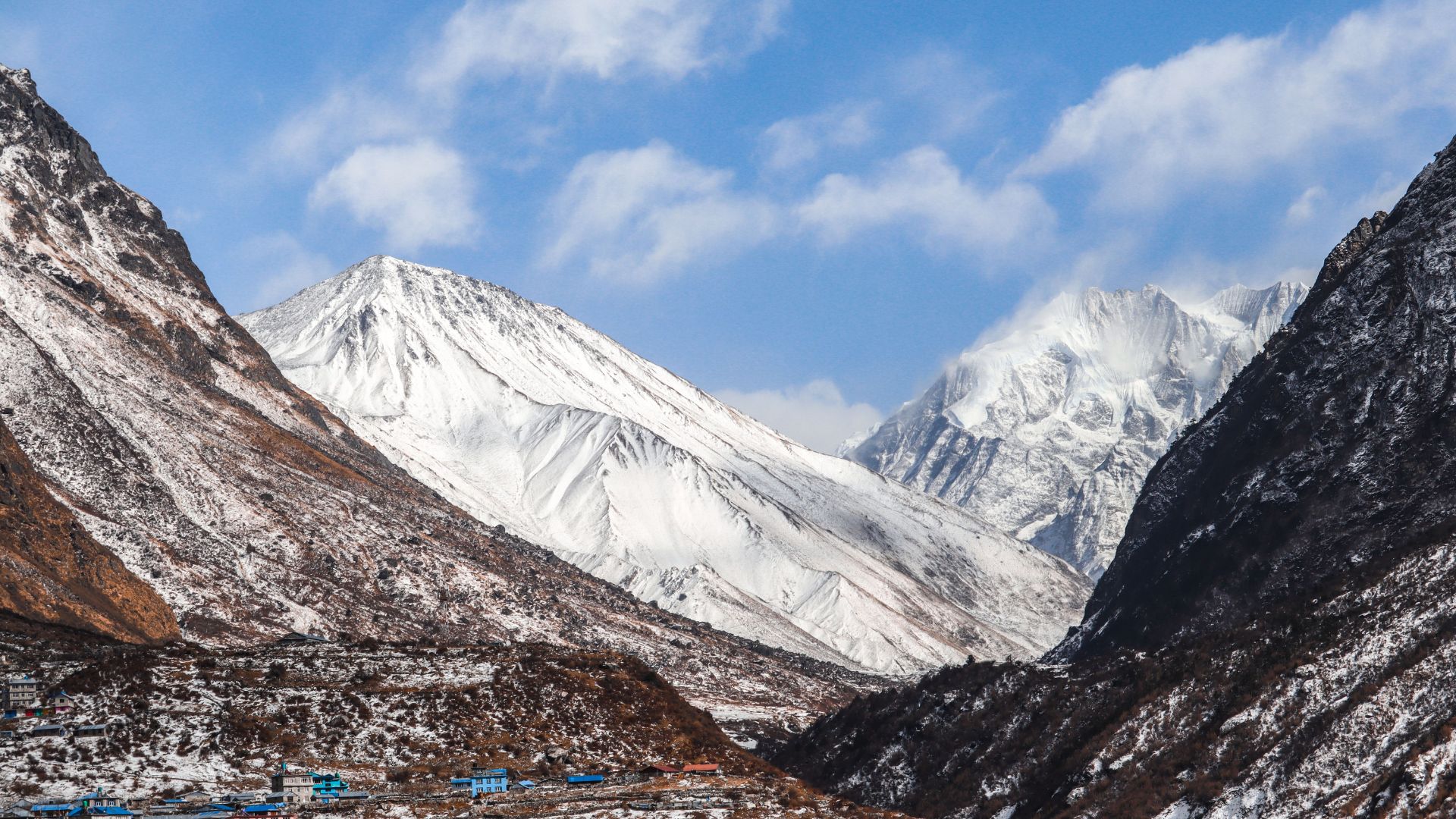
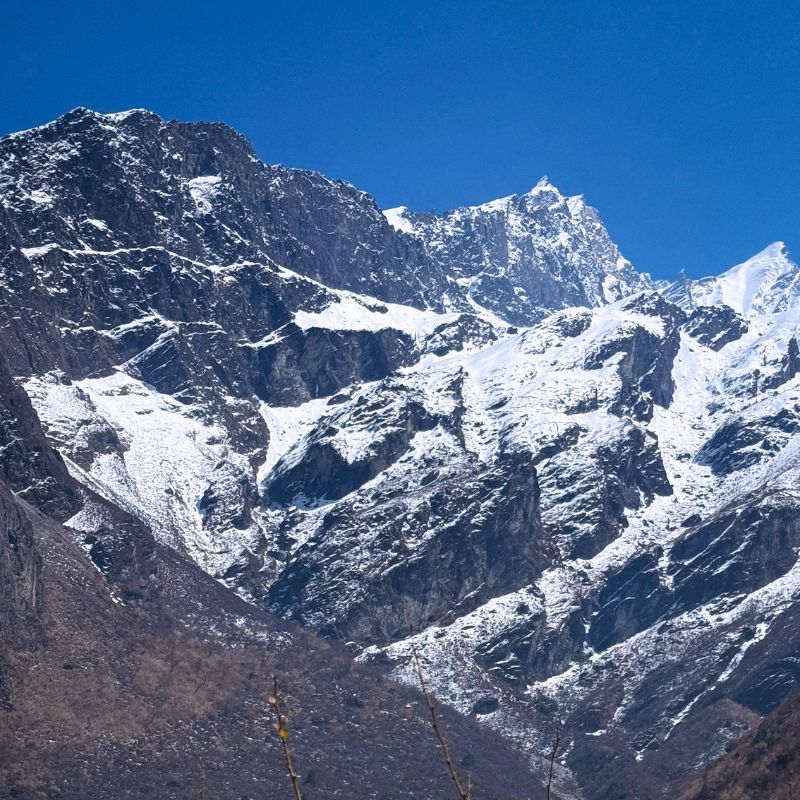
- Enjoy stunning landscapes of non-snowy parts of Langtang mountains and rich green grassy lands.
- Explore more of the traditional culture and traditions of the villages.
- Move through colorful prayer walls, chortens, and the fantastic Buddhist writing that complements the lovely experience.
- Hike through stunning rhododendrons and oak zones, especially if you plan to visit in springtime to see the flowers nearby.
- Test your ability to climb steeply to places of significant elevation, namely Tserko Ri, at 5,030 meters. Breathtaking views of the Himalayas undoubtedly reward the adventure.
- Experience the silence of the Himalayan terrain with clear water rivers, waterfalls, and beautiful trekking trails all along.
- Acquire knowledge about the culture and traditions of the indigenous Tamang community and witness their daily customs and practices.
Trek Description
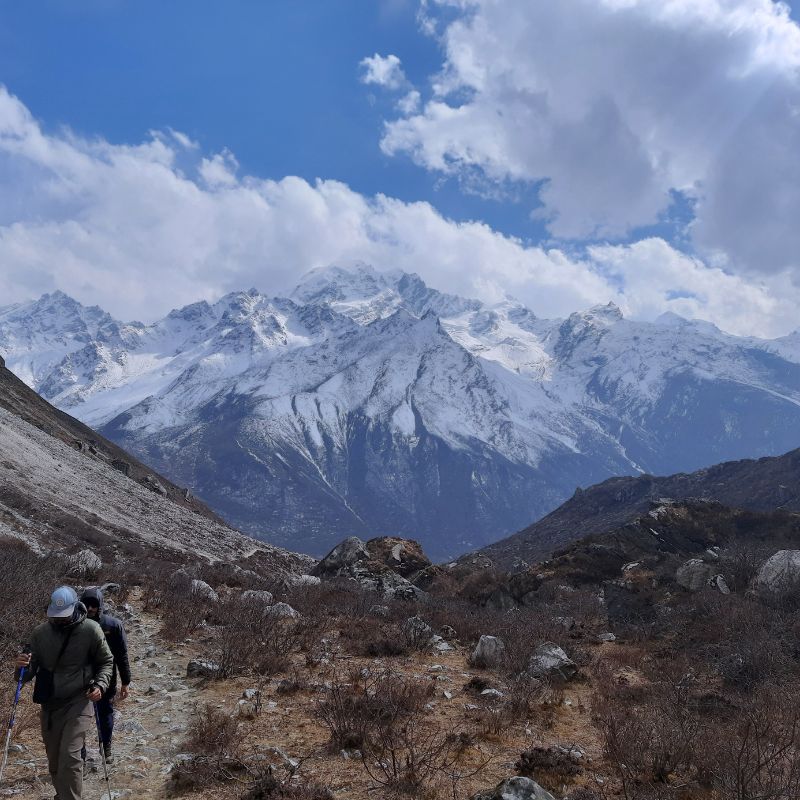
The 8 day Langtang Valley trekking journey is ideal for ascending to an altitude and relishing the picturesque vistas of several Langtang mountains, including the Langtang National Park, the beauty of the Tamang community, and the steep climb up to see Tserko Ri, which will also give you a breathtaking view of some unnamed peaks.
Passing through the interior region of the great Himalayas, the Langtang Valley Trek is one of the most beautiful journeys. As you walk along the steep hills or go up the beautiful laid-back villages and valleys, you will likely be amazed by the prosperous growth of vegetation and forest in the area. It takes you through beautifully laid agricultural land, picturesque villages, and thick and overgrown rhododendrons and oak forests, which continually remind you of the natural world prevailing around you. Every village you cross can give you some insight into the Indigenous people and their living with Buddhist artifacts; wooden houses, colorful prayer flags, and chortens are visible in some areas.
Like many other treks, it is a rigorous foot journey that emphasizes inner search and communication with nature. Despite this adventure having some of the most challenging tests a human body must endure due to altitude, there is always something to look at, and nothing can beat the serenity of nature. During this fascinating hike, you will make great memories and get an excellent insight into the ethnic context and the most significant sights of Langtang Valley.
How does the Langtang Valley Trek 8 Days start and end?
The journey to Langtang Valley Trek starts with a 7-8-hour drive to Syabrubesi early in the morning. It involves roaming the beautiful areas of the Pasang Lhamu Highway, picturesque villages along Trishuli Bazaar, and the village landscape of the area. Syabrubesi acts as the first campsite for the adventure.
However, the climb is not easy due to it’s rocky and uneven terrain and for the keen hiker the reward of the mountains, green valleys and forest clad hills will be an incentive. Next day after spending a day of rest in Syabrubesi, you will start trekking and move towards Lama Hotel. Carrying on your journey further, you will cross the pretty trails with oak and rhododendron shrubs in abundance and then reach the Langtang Village, which exhibits a rich ethnic heritage. On the same route you will also get the opportunity to view other attractive mountains like Langtang Lirung, Yala Peak, among others.
Further ahead, you will go to Kyanjin Gompa, a beautiful and quiet place with view of mountains. The next day, after a fresh morning bed, you will proceed on an acclimatization hike to Tserko Ri for the stunning Himalaya view. As you move on, you’ll get to this breathtaking panoramic view of the Himalayas: Langtang Lirung, Dorje Lakpa, and Shishapangma. The hike will retake us to Kyanjin Gompa and back to Lama Hotel and Syabrubesi. Our final destination for the Langtang Valley Trek is a retracing drive to Kathmandu so as to commend the exciting endeavor and wonderful sceneries enjoyed all through the trekking journey.
Altitude and distance coverage of Langtang Valley Trek
| Day | Route | Altitude | Distance | Duration |
|---|---|---|---|---|
| Day 1 | Drive from Kathmandu to Syabrubesi | 1,460 m / 4,790 ft | 122 km / 75.8 mi (by road) | 7–8 hrs (drive) |
| Day 2 | Trek to Lama Hotel | 2,470 m / 8,104 ft | 9.5 km / 5.9 mi | 6–7 hrs |
| Day 3 | Lama Hotel to Langtang Village | 3,430 m / 11,253 ft | 14 km / 8.7 mi | 6–7 hrs |
| Day 4 | Trek to Kyanjin Gompa | 3,870 m / 12,697 ft | 7 km / 4.3 mi | 3–4 hrs |
| Day 5 | Hike to Tserko Ri and back | 4,984 m / 16,352 ft (max elevation) | 10–12 km / 6.2–7.5 mi (round trip) | 6–7 hrs |
| Day 6 | Kyanjin Gompa to Lama Hotel | 2,470 m / 8,104 ft | 20 km / 12.4 mi | 6–7 hrs |
| Day 7 | Lama Hotel to Syabrubesi | 1,460 m / 4,790 ft | 9.5 km / 5.9 mi | 5–6 hrs |
| Day 8 | Drive back to Kathmandu | 1,400 m / 4,593 ft | 122 km / 75.8 mi (by road) | 7–8 hrs (drive) |
Best season for Langtang Valley Trekking
The best time for Langtang Valley Hike doesn’t matter if you are interested and willing to take risks, but it does depend on your personal preferences. However, according to us, the best season for this trek is either Spring or Autumn when the weather and temperature are worth traveling around Nepal.
Spring (March-May)
With moderate temperatures ranging from 15°C to 25°C (59°F to 77°F), you’ll get to experience explosive growth of flora (rhododendrons, magnolias, and other alpine flowers) and enhanced wildlife activity with the opportunity to spot the Himalayan Monal and various butterfly species. You’ll get to witness local festival celebrations (Dashain, Tihar) and also farming practices and seasonal livelihoods. The trails are also generally open in this season, and you may encounter slight rainfalls. However, higher altitudes may still have lingering snow, so proper gear is essential to stay dry.
Autumn (September-November)
Autumn brings post-monsoon dryness with minimal rainfall, which reduces the risk of slippery trails. The temperature ranges from 15°C to 25°C (59°F to 77°F), so there will be prolonged daylight hours with abundant sunshine. You will have a clear view of peaks such as Langtang Lirung, Ganesh Himal, and many others. You may get to witness major Tibetan Buddhist festivals like Loshar as well.
Accommodation during the Langtang Valley Trek
Langtang Trek accommodation ranges from standard and basic tea houses and lodges to more comfortable and fancy guesthouses, depending on the altitude, location, and cost.
Along the route, you can expect tea houses, guesthouses, and lodges with essential to comfortable rooms and standard trekking menu items, Nepali Cuisine, such as Dal Bhat, Noodles, Soup, etc.
Food options during Langtang Valley Trek
Along the trek, you’ll find a variety of food options at teahouses and lodges. A staple dish of lentil soup, rice, and vegetables with curry, famously known as the “Daal Bhatt” is the primary dish in this trek. You will offered various other quick snacks and local specialties such as noodles (thukpa), sel roti, momos, potatoes, fresh fruits, hot beverages, etc. As the options may be limited, it is recommended that you carry energy bars, nuts, chocolate, and biscuits.
| Meal | Dishes |
|---|---|
| Breakfast | Tibetan Bread, Porridge, Pancakes, Omelet & Toast |
| Lunch | Dal Bhat, Thukpa (Tibetan Noodle Soup), Fried Rice & Chowmein, Sherpa Stew |
| Dinner | Dal Bhat, Momo (Dumplings), Roti with Curry |
| Hot Beverages | Black/Milk Tea, Ginger Tea, Hot Lemon & Honey, Butter Tea |
| Cold Beverages | Mineral Water, Filtered Water, Fresh Juice, Soft Drinks |
Toilet/ Bathroom facilities during the Langtang Trek
Undergoing this trek, most accommodations offer shared toilets and bathrooms. However, cleanliness can vary based on altitude. Stops at higher altitudes are more primitive and less frequently cleaned than stops at lower altitudes. As a result, we, Yeti Hikes, recommend that you take your toilet paper and related sanitizing items with you. The showers, which are hot sometimes, can also lack sufficient pressure. For waste management, please pack your waste or refer to the actual state of affairs in your area.
Outline itinerary of Langtang Valley Trek
Day 1: Drive from Kathmandu to Syabrubesi
Day 2: Trek to Lama Hotel
Day 3: Lama Hotel to Langtang Village
Day 4: Trek to Kyanjin Gompa
Day 5: Kyanjin Gompa to Tserko Ri and descend back
Day 6: Back to Lama Hotel
Day 7: Lama Hotel to Syabrubesi
Day 8: Drive back to Kathmandu
Tour Itinerary
Trek Duration
7-8 hours (drive)
The journey to Syabrubesi will start early in the morning as it is a 7- or 8-hour drive from Kathmandu via local vehicles, shared jeep, or private vehicle, which will be offered at an additional cost. You'll cross through Balaju Bypass in no time, and from there, head towards the main road to the Langtang region, i.e., Pasang Lhamu Highway. To the midpoint of the trek, Trishuli Bazaar, where you rest, and the trek continues towards Dhunche, The Langtang National Park entry point. You will find that the road is steeper and rocky, and that's how you know you are at the main entry point for this trek, Syabrubesi!
Highest Altitude
2,480 meters (8,136 feet)
Trek Distance
11 kilometers (6.8 miles)
Trek Duration
6-7 hours
The overnight stay at Syabrubesi leads to the Lama Hotel. The way goes on as you walk through the trail of beautiful green grasslands, such as the Langtang range that stretches from both sides of the valley. You'll pass through the herders grazing their herd on the high-altitude grasslands. This area was once graceful; however, after the 2015 earthquake, there are currently only a few temporary settlements and an army post. Further, the trail becomes steeper as you pass through lush forests of oak, rhododendrons, a few waterfalls, and suspension bridges. The day will end as you reach your destination after 6-7 hours.
Highest Altitude
3,430 meters (11,253 feet)
Trek Distance
14 kilometers (8.7 miles)
Trek Duration
7 hours
The next day's destination will be Langtang Village, which is approximately 3,430m high and takes almost 7 hours. You will get to observe the mesmerizing sight of the surrounding landscapes and the river. As you move forward, you will arrive at Ghodatabela, famous for its charming tea houses and scenic views. You'll get insight into the Langtang Valley and the surrounding peaks. By mid-afternoon, you'll reach Langtang Village in a stunning alpine setting. That ends our third day of the trek.
Highest Altitude
3,870 meters (12,696 feet)
Trek Distance
7 kilometers (4.3 miles)
Trek Duration
4-5 hours
Subsequently, you will continue the trek the following day with a gentle climb as the route is shorter. You will pass through Buddhist artifacts (Chortens, Prayer Flags) with Buddhist inscriptions carved into them. With the wonderful mountain views, you will see the captivating sight of watermills and yak pastures. You will reach in no time and can spend the remainder of the day relaxing or touring the village. However, the Yeti Hikes staff advises that you all climb a few hundred meters or more towards Langshisha Kharka, as this will give you a better understanding of the environment and possibly a deeper connection with the spiritual and cultural elements.
Highest Altitude
5,030 meters (16,500 feet)
Trek Distance
10 kilometers (6.2 miles)
Trek Duration
7-8 hours (round trip)
Time passes without us knowing, and you're already on the fifth day of the trek. With a magnificent view, you will trek to Tserko Ri (5,030m high), a prominent peak and a highlight of the Langtang Valley trek. It will be a challenging yet fun trek due to the high altitude, demanding ascent, and rocky terrain. Within a few hours, you'll get to this breathtaking panoramic view of the Himalayas: Langtang Lirung, Dorje Lakpa, and Shishapangma. After a sweet break, you'll return to Kyanjin Gompa and resume your trek.
Highest Altitude
2,480 meters (8,136 feet)
Trek Distance
14 kilometers (8.7 miles)
Trek Duration
6-7 hours
The following day, you will move down to the Lama Hotel. As you will be heading towards a lower altitude, it will be much easier, and the air will, accordingly, get warmer. You'll retrace your steps and reach Lama Hotel within 6-7 hours.
Highest Altitude
1,550 meters (5,085 feet)
Trek Distance
11 kilometers (6.8 miles)
Trek Duration
6-7 hours
The next morning, you will make your way back to Syabrubesi or, if you prefer, to another, shorter but more steep trail. The second route is the Rimche and Sherpa Gaun. However, the route also seems to be affected by weather conditions, whether it is snowing or raining or any other bad weather condition, and one's energy.
Highest Altitude
1,400 meters (4,593 feet)
Trek Duration
7-8 hours (drive)
The return trip to Kathmandu has finally arrived. After breakfast at Syabrubesi, we will head towards Kathmandu. Our memorable journey will come to an end as we reach Kathmandu, and here we bid Goodbye!
What's Included
Included
- Accommodation for 7 nights in teahouses.
- A highly experienced, helpful, knowledgeable, friendly, English-speaking, well-trained, Government-licensed guide. The price includes his salary, food, drinks, accommodation, transport, and insurance.
- Kathmandu to Syabrubesi and vice-versa, local bus.
- Lantang National Park Permit, TIMS Card.
- Three meals a day: breakfast, lunch, and dinner, and tea/coffee during the trekking.
- Safe drinking water.
- First-add kit box.
- Yeti Hikes's T-shirt, cap, duffle bags, city and trekking route maps – if necessary.
- Arrangement of emergency evacuation service (should have insurance for emergency evacuation and will be paid by your travel insurance company)
Excluded
- The fees associated with your Nepal visa.
- Optional Private Jeep, US$ 225
- Insurance for helicopter evacuation, as well as personal travel and health insurance.
- Extra nights of accommodation, lunch, and dinner in the city
- Your expenses, including laundry, baggage charges, phone calls, battery recharges, bar and beverage bills, boiled or bottled water, hot and cold showers, and an additional attendant, are as follows.
- The tips for the trekking personnel and drivers.
- Additional expenses that arise as a result of flight delays, strikes, weather conditions, or any other event beyond our control.
Gear List
A comprehensive checklist of the clothing and equipment you need for a successful trek. We provide duffel bags, sleeping bags, and down jackets if needed.
Clothing
- For a Langtang Valley trek , you’ll need to pack efficiently to stay comfortable and prepared for the range of weather and trail conditions. Here’s a list of essential items:
- Base Layers
- Thermal tops and bottoms (for warmth at night).
- Moisture-wicking t-shirts (2-3, quick-dry fabric).
- Lightweight trekking pants (convertible into shorts if possible).
- Insulating Layers
- Fleece jacket or sweater.
- Insulated down jacket (for colder nights and higher altitudes).
- Outer Layers
- Waterproof and windproof jacket.
- Waterproof pants.
- Hiking Socks
- Wool or synthetic socks (3-4 pairs).
- Liner socks (optional, to prevent blisters).
- Accessories
- Hat (for sun protection).
- Beanie or warm hat (for higher altitudes).
- Buff or scarf (to protect against wind and dust).
- Gloves (both lightweight and insulated if possible).
Footwear
- Hiking Boots
- Sturdy, waterproof trekking boots (well-broken-in).
- Camp Shoes
- Lightweight sandals or camp shoes for resting in the evenings.
Backpacks
- Daypack (20-30L)
- For essentials like snacks, water, and rain gear.
- Duffel Bag (if using porters)
- You may need a duffel for the bulk of your gear if you’re hiring porter.
Trekking Gear
- Trekking Poles
- Helpful for balance and reducing stress on knees.
- Sleeping Bag
- Rated for temperatures below freezing (around -10°C/14°F).
- Water Bottles
- Reusable bottles or a hydration bladder (2-3 liters capacity).
- Water Purification
- Tablets, drops, or a portable filter to avoid purchasing bottled water.
- Headlamp
- With extra batteries (essential for early starts or evening walks).
- Sunglasses
- UV protection to safeguard against strong sunlight at altitude.
- Trekking Map and Compass
- Optional, but can help you follow along with the route.
Toiletries
- Sunscreen (SPF 50+)
- Lip Balm (with SPF)
- Toilet Paper
- Wet Wipes
- Hand Sanitizer
- Biodegradable Soap/Shampoo
- Toothbrush and Toothpaste
First Aid & Medication
- Personal Medication
- Bring a sufficient supply of any prescribed medications.
- Basic First Aid Kit
- Painkillers, blister care (like moleskin), band-aids, and antiseptic cream.
- Altitude Sickness Medication
- Such as acetazolamide (consult your doctor before taking).
Snacks and Energy Foods
- High-Energy Snacks
- Protein bars, nuts, dried fruit, chocolate, or energy gels for extra fuel on the trail.
Electronics
- Camera/Phone
- For capturing memories.
- Portable Charger/Power Bank
- Charging points may be scarce and expensive.
- Spare Batteries
- Cold weather can drain batteries quickly.
Miscellaneous
- Money
- Carry enough cash for food, charging, and tips in remote areas.
- Trekking Permits and Passport Copies
- Ensure you have copies of your TIMS and ACAP permits, as well as your passport.
- Small Locks
- For your bags.
- Packing wisely can make a significant difference on this langtang valley trekking , so focus on essentials and try to keep your load manageable. Safe travels!
Tour FAQs
General Information
This trek offers a unique blend of cultural immersion, stunning mountain scenery, and diverse landscapes, including lush forests, alpine meadows, and glaciers.
This trek is ideal for those seeking a moderate-level trek with a good balance of cultural experiences and stunning scenery. It's suitable for first-time trekkers, those with moderate fitness levels, and travelers interested in experiencing Tibetan Buddhist culture.
Moderate physical fitness is required. You should be comfortable with daily hikes of 4-6 hours, often with gradual elevation gain.
The best seasons for trekking in the Langtang Valley are spring (March-May) and autumn (September-November) when the weather is generally clear and stable.
Inclusions: Typically include accommodation in teahouses, meals, experienced guides, porters, domestic transportation, national park permits, and entrance fees.
Exclusions: Usually include travel insurance, tips for guides and porters, personal expenses, and alcoholic beverages.
Yes, you can often customize the itinerary to fit your specific needs and preferences. You may choose to add extra acclimatization days, explore optional side trips, adjust the trekking pace, or incorporate cultural experiences.
Contact a reputable travel agency specializing in trekking in Nepal. They can provide detailed information, assist with bookings, and answer any specific questions you may have.
Essential items include comfortable trekking shoes, warm layers of clothing (including a down jacket), rain gear, sunscreen, sunglasses, a hat, and a water bottle. A detailed packing list will be provided by your travel agency.
Altitude sickness is the primary risk. Other potential challenges include unpredictable weather conditions, potential inconveniences due to unforeseen circumstances, and the physical demands of high-altitude trekking.
Health & Safety
Experienced and licensed guides are provided to ensure your safety throughout the trek. First-aid kits and emergency communication devices are typically carried by the guides. You will also receive information on altitude sickness and how to prevent it.
Press Enter to search